

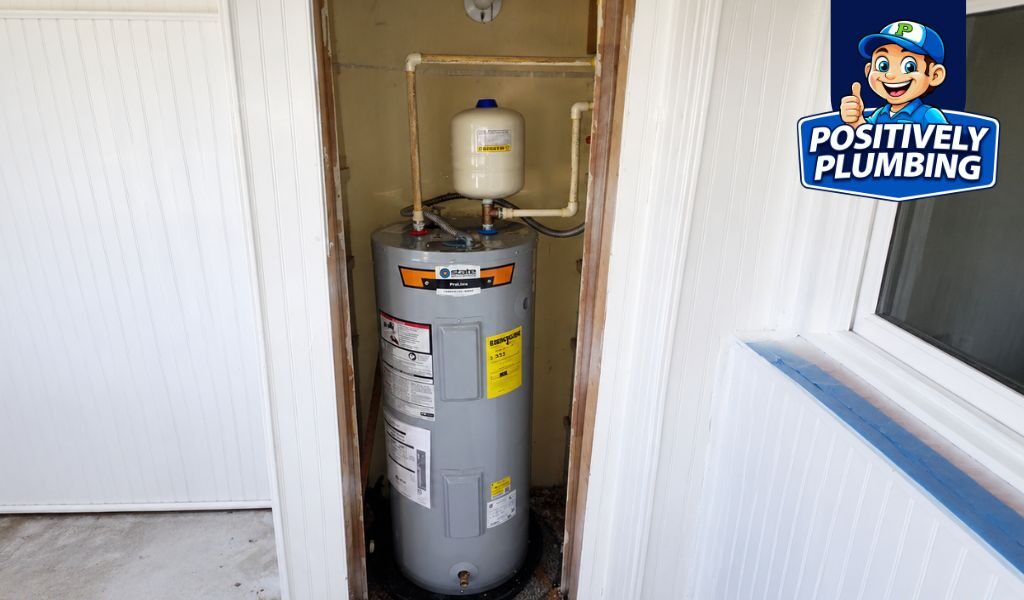
Why Does Choosing Between a Tankless vs. Tank Water Heater in St. Petersburg Feel So Tricky?
Your decision affects comfort, monthly bills, available space, and whether your system can keep up when everyone needs hot water at once. You need to know what fits your home before you invest.
Positively Plumbing LLC can help you make that choice with confidence. We’ll look at your household demand, budget, and plumbing setup, then explain the best options clearly so you can choose the right water heater without pressure or guesswork.
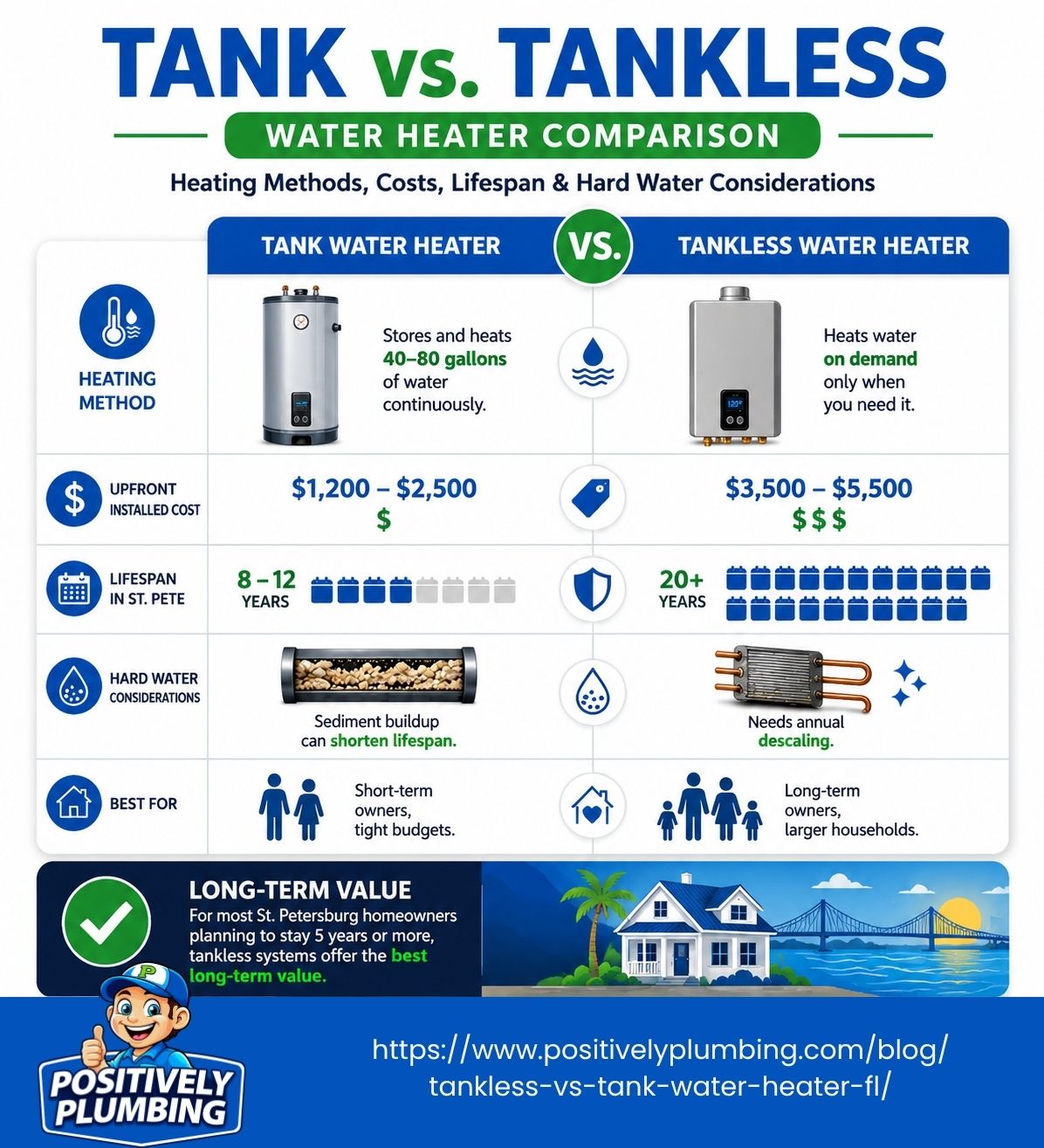
| Factor | Tank Water Heater | Tankless Water Heater |
|---|---|---|
| Upfront installed cost | $1,200–$2,500 | $3,500–$5,500 (gas) |
| Lifespan in St. Pete | 8–12 years | 20+ years |
| Annual energy savings | Baseline | $40–$200 less per year |
| Hot water supply | Limited by tank size | Unlimited on demand |
| Hard water impact | Sediment buildup, shorter life | Needs annual descaling |
| Best for | Short-term owners, tight budgets | Long-term owners, larger households |
Your water heater is one of the hardest-working appliances in your home. In Pinellas County, it faces an extra challenge: hard water with 9–11 grains per gallon of minerals that shortens the life of any system you install.
The choice between a tank and tankless heater isn’t just about hot water; it’s about how much you’ll spend over the next 10–20 years, how much maintenance you’re willing to do, and whether your home’s gas lines and electrical panel are ready for an upgrade.
Tank heaters store 40–80 gallons of hot water around the clock, losing energy even when nobody’s home. Tankless heaters fire up only when you turn on the tap, eliminating that standby energy waste, but they cost more upfront and need more prep work to install.
For most St. Petersburg homeowners planning to stay 5 years or more, tankless systems tend to win the long-term math. For everyone else, a quality tank heater may be the smarter, simpler move.
This guide breaks it all down: costs, lifespan, hard water realities, rebates, and more, so you can make a confident decision.
I’m Stephanie Bryne, co-owner of Positively Plumbing in St. Petersburg, FL, and together with my husband Kevin, we help homeowners make clear, confident decisions about their plumbing systems. We often guide customers through choices like tankless vs tank water heater options in St Petersburg, FL, focusing on honesty, efficiency, and long-term value for every home.
Tankless vs. Tank Water Heater St. Petersburg FL: The Ultimate Comparison
To truly understand how these systems stack up in our warm coastal climate, we have to look past the marketing brochures. Our unique environment in Pinellas County, boasting warm year-round groundwater temperatures of 69°F to 72°F, means water heaters don’t have to work quite as hard to raise water temperatures as they do up North. However, our water quality and coastal air introduce other critical variables.
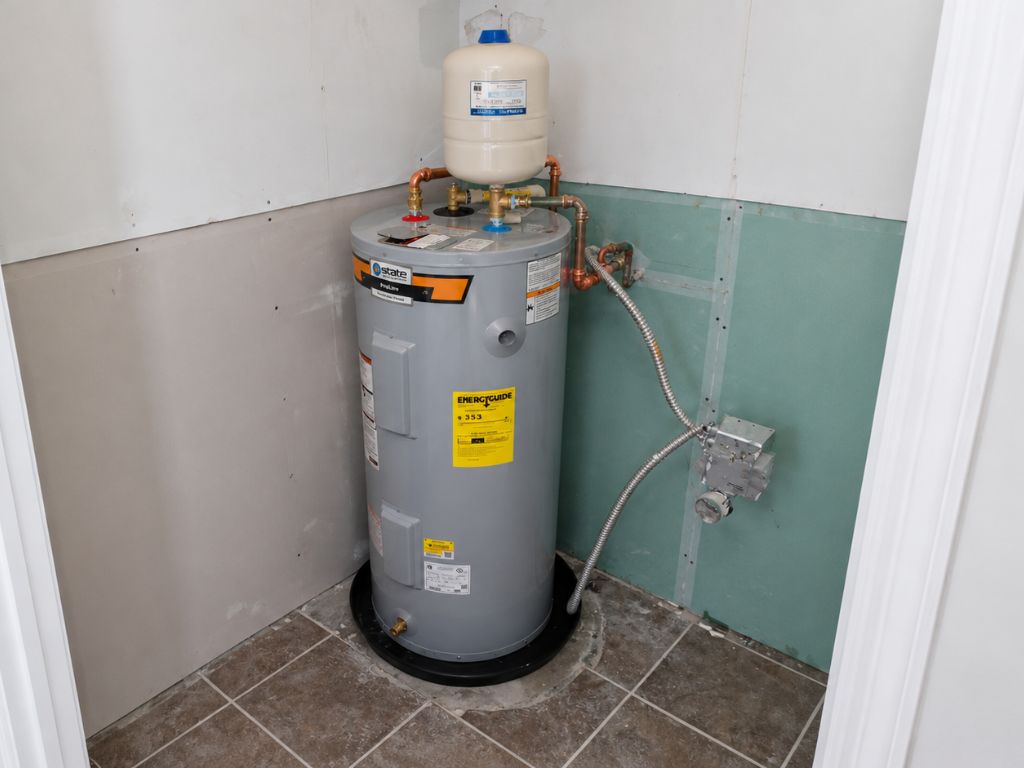
When comparing a tankless vs tank water heater st petersburg fl homeowners must weigh the immediate financial outlay against decades of efficiency. A traditional tank system keeps 40 to 80 gallons of water hot 24/7. This constant heating leads to standby energy loss. On the flip side, tankless units heat water instantly as it flows through a high-powered heat exchanger, providing an endless supply of hot water only when you open a tap.
To explore the fundamental engineering differences between these two technologies, you can read more from Tank vs Tankless Water Heaters.
Cost, Lifespan, and the Reality of a Tankless vs. Tank Water Heater in St. Petersburg, FL
Let’s talk numbers. In the St. Petersburg area, a standard 50-gallon electric tank water heater replacement typically costs between $1,200 and $2,500 fully installed. If you choose to transition to a gas tankless system, the upfront installation costs generally range from $3,500 to $5,500, depending on the complexity of the retrofitting.
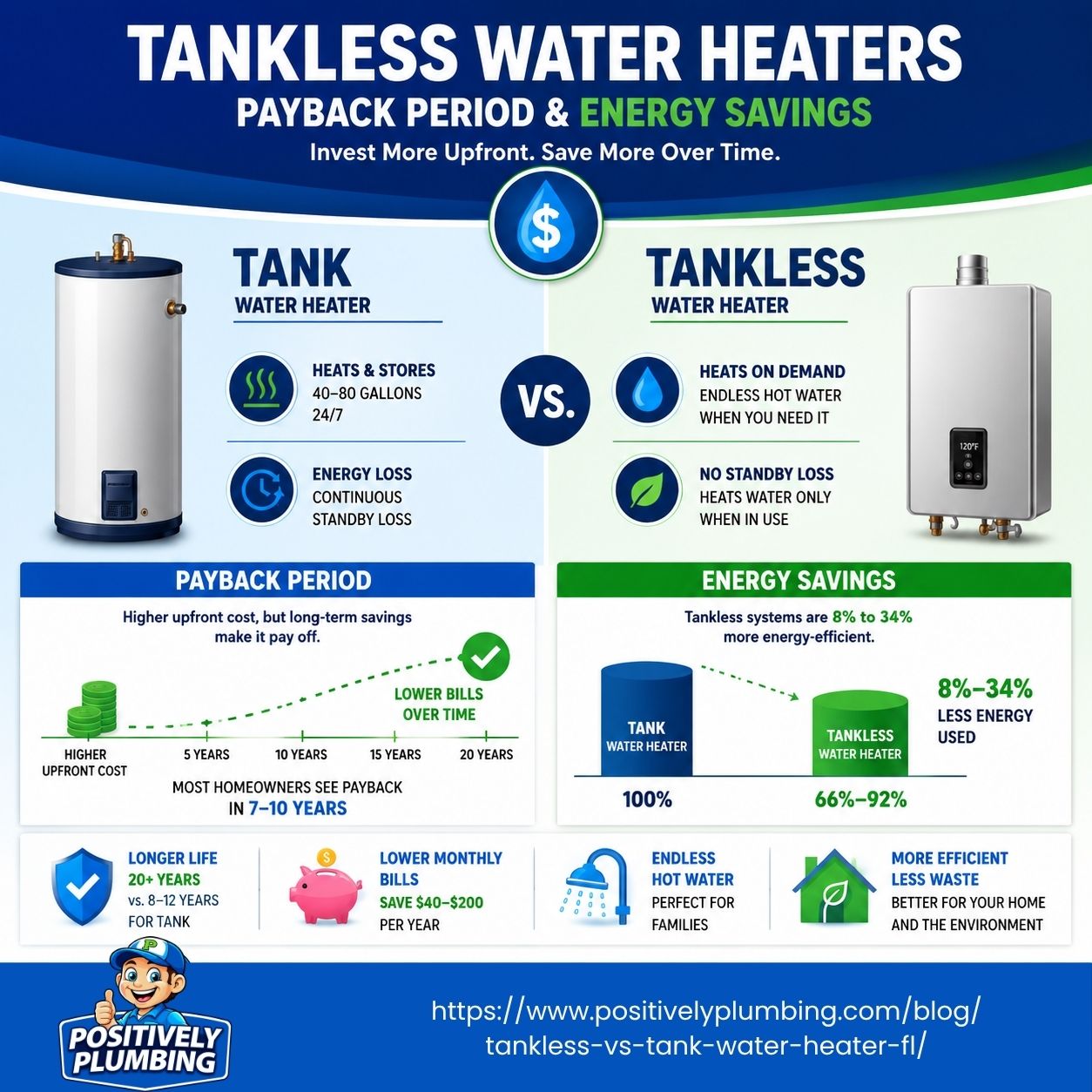
While the initial cost of a tankless conversion is usually higher, the long-term picture can still make sense for many homes:
- Energy Efficiency: According to the U.S. Department of Energy, tankless water heaters can be 24% to 34% more energy-efficient for homes using 41 gallons or less of hot water daily. For higher-demand homes using around 86 gallons per day, savings are typically 8% to 14%.
- Lifespan Advantage: Tankless water heaters generally last more than 20 years, and many parts can be replaced to extend service life. Traditional storage tank units usually have a shorter lifespan.
- The Return on Investment: The payback depends on your hot water usage, installation needs, and utility costs. Tankless units cost more upfront, but lower operating costs and longer service life can make them a strong fit for homeowners planning to stay put.
How Tampa Bay’s Hard Water Affects Maintenance and Longevity
The Floridan Aquifer supplies beautiful, clean water to our homes, but it is packed with dissolved calcium and magnesium. St. Petersburg’s municipal water supply averages 9 to 11 grains per gallon (GPG) of hardness, which places us firmly in the “hard to very hard” category.
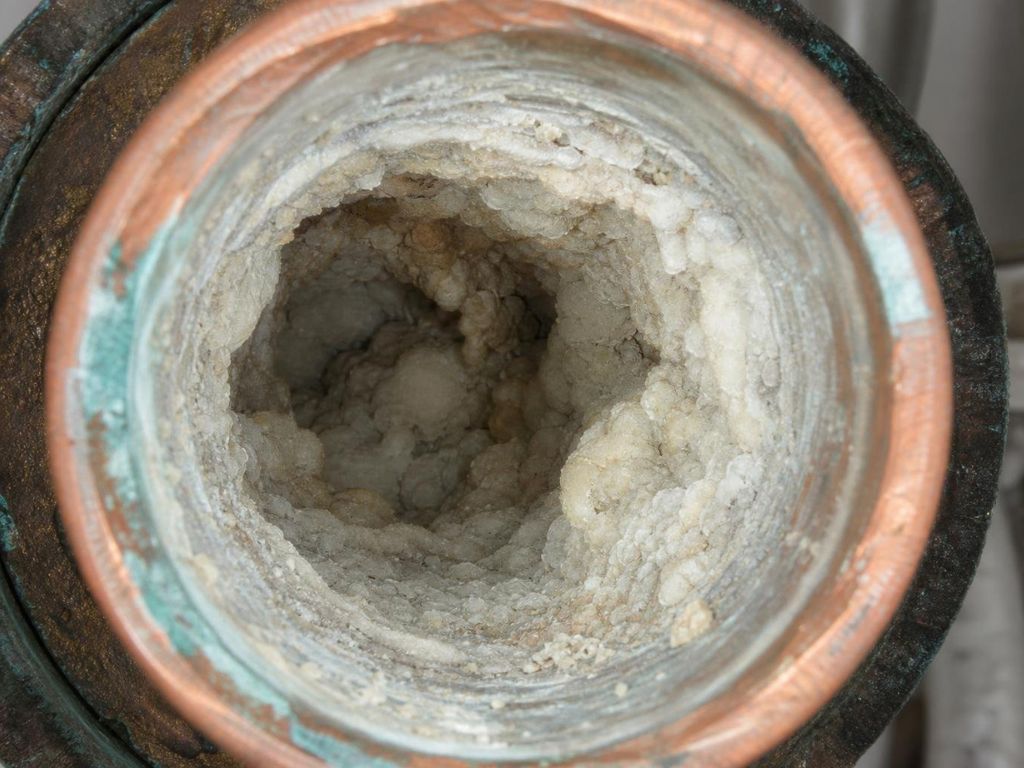
When hard water is heated, minerals precipitate out and form a rock-hard scale.
- In Tank Heaters: This scale settles at the bottom of the tank, creating an insulating barrier between the heating element and the water. This forces the system to run hotter and longer, eventually overheating the tank’s bottom and causing it to crack.
- In Tankless Heaters: Scale clings directly to the narrow copper or stainless steel tubes of the heat exchanger. Left unchecked, this scale restricts water flow and causes the unit to overheat and shut down.
To combat this, we highly recommend regular upkeep. Traditional tanks should be flushed once a year. Tankless systems require a professional descaling flush using food-grade white vinegar every 12 to 18 months to clear out the heat exchanger. Pairing either system with a whole-home water softener is the ultimate way to protect your investment and extend your water heater’s life. For specialized local assistance, you can schedule professional Water Heater Service to keep your system scale-free.
What Infrastructure Upgrades and Hurricane Prep Do Florida Homes Need?
Converting from a traditional tank to a tankless system isn’t always a simple “plug-and-play” swap. Because tankless units heat water instantly, they require a massive burst of energy.
- Gas Line Upgrades: Standard gas tank heaters use about 30,000 to 40,000 BTUs. A gas tankless unit demands 150,000 to 199,000 BTUs. This means we usually must upgrade your existing gas line from a 1/2-inch pipe to a 3/4-inch pipe.
- Electrical Panel Capacity: Whole-home electric tankless units require significant electrical current—often needing two to four 40-amp double-pole breakers. If your home has an older 100-amp electrical panel, a panel upgrade to 200 amps will be necessary.
- Venting Requirements: Gas tankless systems cannot use old metal chimneys. They require specialized concentric PVC or stainless steel venting to safely vent exhaust gases directly through an exterior wall.
Additionally, we must consider storm season. Traditional tank water heaters hold 50 gallons of emergency fresh water that you can access during a prolonged power outage. However, standard tankless units require electricity to operate their digital control boards and ignition systems, meaning they will not run during a power outage unless backed up by a generator or battery system. If you ever experience issues after a major storm, getting professional water heater service can help restore hot water safely and efficiently.
Sizing, Household Demand, and Local Utility Rebates
Sizing a tankless water heater is entirely different from choosing a 40- or 50-gallon tank. Instead of storage capacity, tankless sizing is based on Gallons Per Minute (GPM) and temperature rise.
Because St. Petersburg’s groundwater starts at a warm 70°F, we only need to heat the water by about 50°F to reach a comfortable 120°F. This local climate advantage means a tankless unit can deliver a much higher GPM flow rate here in Florida than the exact same model would in New York or Ohio!
- 1–2 People: A unit delivering 3 to 4 GPM is perfect.
- 3–4 People: We recommend a system delivering 5 GPM, allowing you to run a shower and the washing machine simultaneously.
- 5+ People: A larger 7+ GPM system or multiple units will ensure nobody ever gets a cold surprise.
To help offset the initial conversion costs, local utilities offer excellent incentives. If you switch from an electric tank to a natural gas tankless system, TECO Peoples Gas offers rebates up to $700 (or $550 for a gas-to-gas upgrade). Duke Energy provides rebates up to $800 for high-efficiency hybrid heat pump systems. Plus, under the federal Energy Efficient Home Improvement Credit, qualifying gas tankless installations may earn you a federal tax credit of up to $600. You can explore our comprehensive plumbing services to see how we help you maximize these incentives.
Making the Right Choice for Your St. Petersburg Home
Choosing between a tankless and a traditional tank water heater comes down to your family’s daily habits and how long you plan to live in your Pinellas County home.

If you live in a compact historic bungalow in Old Northeast or a modern downtown condo, a tankless water heater is a game-changer. It mounts easily on a wall, even on the exterior of your home, freeing up valuable closet or garage floor space. Plus, you will never run out of hot water, even if you have back-to-back houseguests visiting for the weekend. However, if you plan to move within the next 3 to 5 years, a high-efficiency traditional tank water heater is likely the more practical, budget-friendly choice.
Choosing a Tankless vs. Tank Water Heater in St. Petersburg, FL: Our Professional Verdict
At Positively Plumbing LLC, we believe in providing honest pricing, reliable workmanship, and absolutely no-pressure sales. Based right here in Largo, FL, our family-owned business is dedicated to helping Pinellas County homeowners find the absolute best solutions for their budgets and lifestyles.
We don’t believe in one-size-fits-all solutions. Our experienced, licensed plumbers will evaluate your home’s current plumbing, gas lines, and electrical capacity to give you a straightforward, transparent recommendation. Whether you decide to go with a highly efficient modern tank system or make the exciting leap to an endless tankless system, we are here to ensure the job is done safely, cleanly, and up to local building codes.
Still comparing tankless vs. tank water heaters for your home? Get honest guidance from Positively Plumbing LLC. Schedule Service today! Proudly serving St. Petersburg, Feather Sound, Redington Beach, Redington Shores, Belleair Shore, Seminole, and surrounding communities.
