
For many Pinellas County homeowners, the first sign is water rising around their feet, a slow-draining shower, or a musty smell that keeps coming back. It may look like “just hair,” but soap scum, body oils, hard water minerals, and hidden pipe buildup can all narrow the drain over time. If you ignore it, that small clog can lead to repeated backups, sewer odors, or even a deeper line problem that needs fast attention.
At Positively Plumbing LLC, we help Largo and Pinellas County homeowners identify the root cause without pressure or gimmicks, rather than just selling you a temporary fix. Our family-owned team brings honest pricing, no-pressure recommendations, and reliable workmanship to every drain cleaning call, whether the issue is a simple hair mat below the strainer or a serious blockage farther down the line. If your shower keeps backing up, don’t wait for standing water to make the mess worse; let Positively Plumbing inspect, clear, and protect your drain before the problem gets worse.
| Cause | How Common |
|---|---|
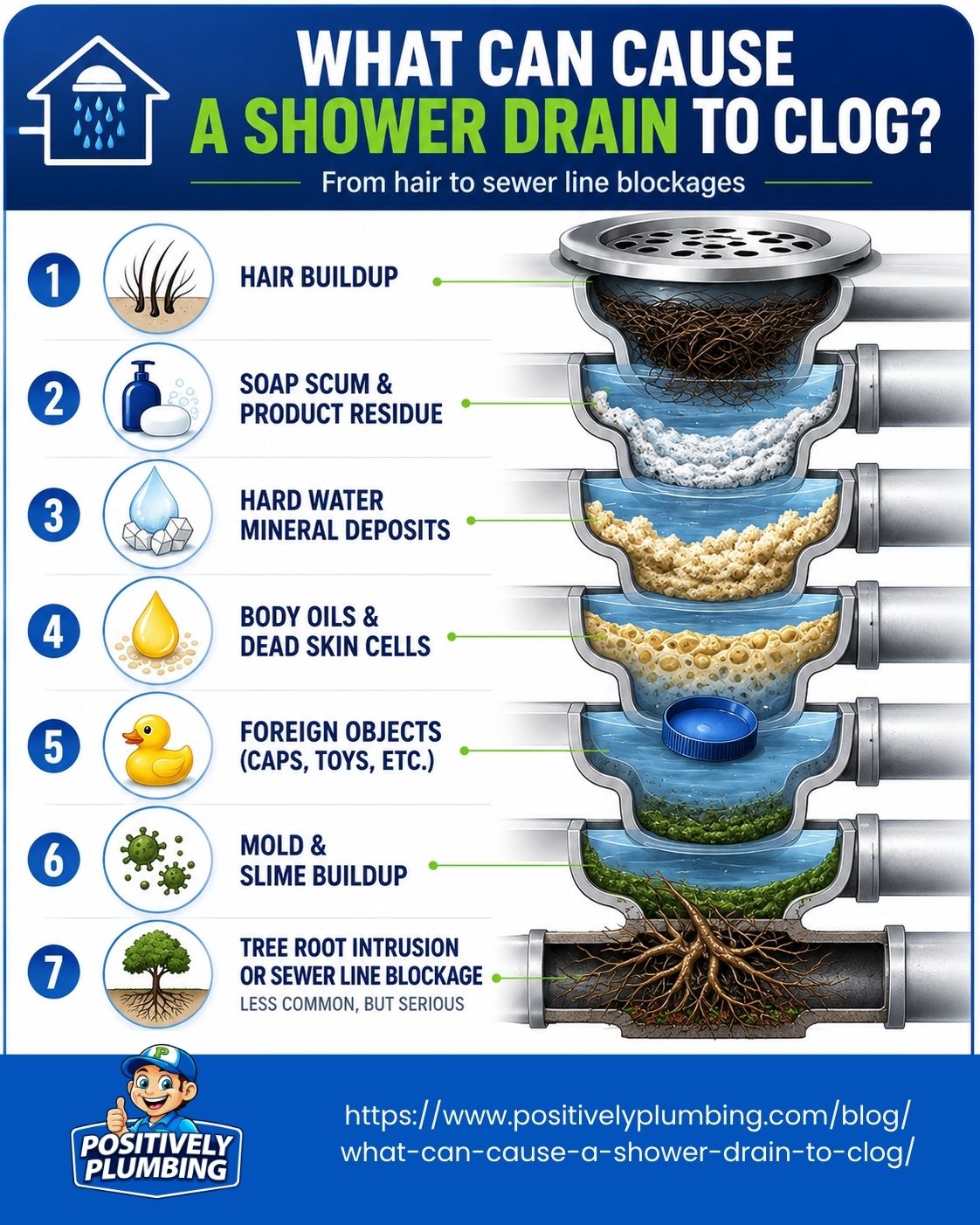
| Hair buildup | Most common |
| Soap scum and product residue | Very common |
| Hard water mineral deposits | Common |
| Body oils and dead skin cells | Common |
| Foreign objects (caps, toys, etc.) | Occasional |
| Mold and slime buildup | Occasional |
| Tree root intrusion or sewer line blockage | Less common, but serious |
You step in for a quick shower and notice the water rising around your feet. You’ve probably pulled a clump of hair out of the drain before, only to have the same problem back within days. That’s the frustrating part: visible hair is rarely the whole story.
Soap scum, body oils, shampoo residue, and even your local water supply all work together to slowly narrow your pipes. And in some cases, the problem isn’t in your shower at all; it’s deeper in the line.
I’m Stephanie Byrne, co-owner of Positively Plumbing in Largo, and after years of scheduling drain cleaning calls across Pinellas County, I’ve seen what can cause a shower drain to clog, from a simple hair mat just below the strainer to tree roots pushing into aging sewer lines. This guide will walk you through every major cause and help you figure out exactly what you’re dealing with.
What Can Cause a Shower Drain to Clog?
When we look at the causes that clog your plumbing system, the culprits typically fall into three categories: physical blockages, structural pipe issues, and environmental factors.
Most modern bathroom drains rely on relatively narrow pipes, usually between 1.5 and 2 inches in diameter. Because these lines are small, it does not take a massive obstruction to restrict water flow. When debris enters the drain, it must pass through the strainer, travel down the drain body, navigate the sharp bend of the P-trap, and move into the horizontal branch line before finally reaching your main sewer line.
If there is a blockage, you need to know whether it is a simple localized issue or a symptom of a much larger, deep-system problem.
| Localized Shower Clog | Main Sewer Line Blockage |
|---|---|
| Water only backs up in the shower pan | Multiple drains (shower, toilet, sink) back up simultaneously |
| No strange noises from other fixtures | Toilets gurgle or bubble when the shower drains |
| Usually caused by hair, soap scum, or small objects | Often caused by tree roots, collapsed pipes, or heavy grease |
| Easily cleared with a hand snake or plunger | Requires professional diagnostics and specialized equipment |
How Do Hair and Soap Scum Cause a Shower Drain to Clog?
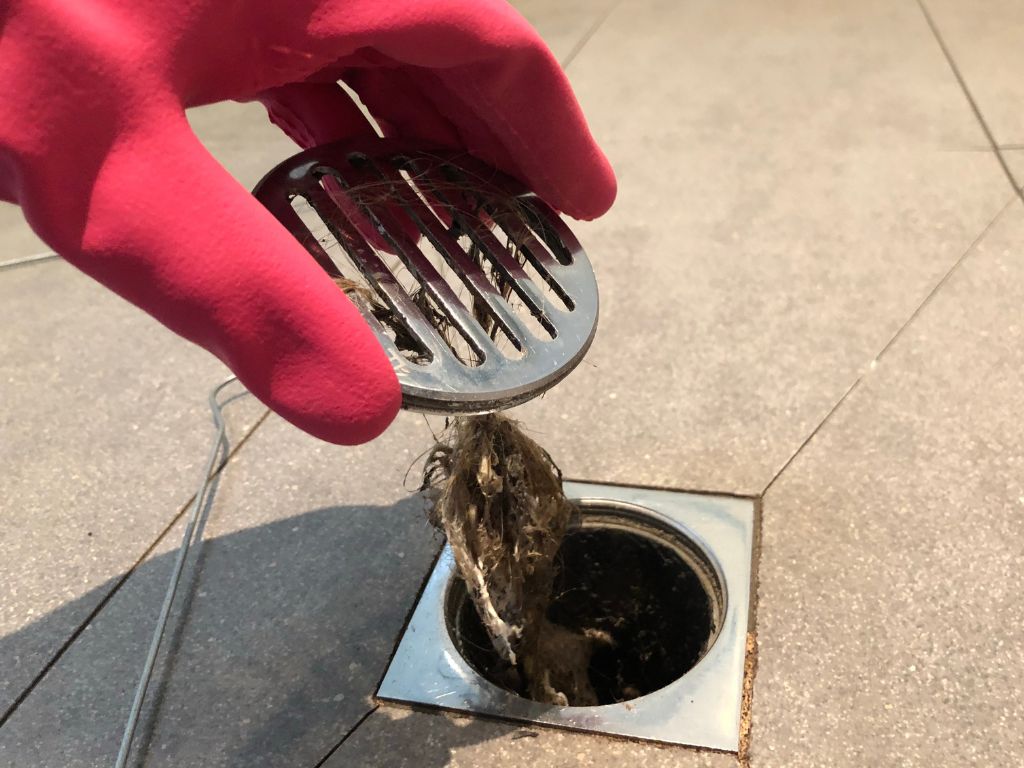
It is a well-documented plumbing fact that hair is the single most common cause of shower drain clogs. Every time you shower, you naturally shed between 50 and 100 strands of hair. If you have multiple people (or pets!) using the same bathroom, that daily volume adds up fast.
But hair alone isn’t the only issue. The real trouble starts when hair meets soap scum, body oils, and heavy conditioners. As you wash, liquid soap and shampoo residue coat the inside of your drain pipes, creating a sticky, glue-like film. When loose hair slides down the drain, it gets caught in this sticky residue.
Over time, this hair-and-soap mixture behaves like a net inside the pipe, catching more hair, dead skin cells, and lint. This sticky trap typically forms directly under the drain cover or inside the curved P-trap. Because the P-trap is designed to hold water to keep sewer gases from entering your home, its natural curvature slows down water flow, making it the perfect resting place for hair and soap sludge to settle and harden. To dive deeper into how this process occurs, check out this guide on Shower Drain Clogged With Hair: Causes and Diagnosis.
Can Hard Water Minerals Damage Pipes and Cause Shower Drain Clogs?
Here in Pinellas County, we deal with hard water. Hard water contains elevated levels of dissolved minerals like calcium and magnesium. Over years of daily use, these minerals precipitate out of the water and cling to the interior walls of your plumbing.
Think of mineral buildup like cholesterol in an artery: it slowly scales up, narrowing the pathway water can travel through. This rough, chalky scale also creates a high-friction surface that catches hair and soap scum far more easily than a smooth, clean pipe would.
If you own a home in Pinellas County built before 1995, you likely have older galvanized steel or cast iron drain lines, meaning age is working against you. As these pipes decay, their interior surfaces rust, flake, and corrode, leaving a rough, jagged environment where clogs form instantly. If you suspect your home’s aging lines are collapsing or heavily corroded, you can learn more about your options on our Pipe Repair & Replacement page.
Can Tree Roots Cause a Shower Drain to Back Up?
Sometimes, the issue causing your shower to pool with water has nothing to do with what you are putting down the drain. If tree roots find their way into your main sewer line, they can cause a massive backup that forces water to overflow at the lowest open fixture in your home, which is almost always your shower pan.
In search of moisture and nutrients, tree roots will exploit even the microscopic cracks in older clay, concrete, or cast iron sewer pipes. Once inside, they grow rapidly, creating a dense, fibrous root mass that completely blocks the flow of wastewater.
If you notice gurgling sounds coming from your toilet when the shower drains, or if multiple fixtures in your home are backing up at the same time, you are likely dealing with a sewer main issue rather than a simple shower clog. When roots take over, professional intervention is necessary. You can explore how we handle these heavy-duty blockages on our Sewer Repair page.
How to Clear and Prevent Stubborn Shower Clogs?
When you are faced with standing water, you want a solution fast. However, it is important to proceed with caution. Many homeowners assume that a backed-up shower drain is designed to be completely watertight, meaning the water will safely pool in the shower pan until it drains.
In reality, while the shower pan itself is watertight, a prolonged backup can put pressure on the drain gasket, the flange sealing, or nearby grout lines. If your shower pan flange wasn’t sealed correctly during construction, or if the plastic drain assembly nut has loosened over time, standing water can actually migrate behind your walls or under the subfloor, leading to hidden mold growth and expensive water damage.
Safe DIY Methods for Clearing Minor Blockages
Before you call in the pros, there are several safe, chemical-free DIY methods you can try to clear minor blockages.
- The Manual Pull (Wire Hanger or Plastic Hair Tool): Remove your drain cover using a screwdriver. Take a cheap, flexible plastic hair-snagging tool (often called a zip-it) or fashion a small hook at the end of a straightened wire coat hanger. Carefully insert it into the drain, twist, and pull upward. You will likely pull out the primary hair clog immediately.
- The Boiling Water Flush: If you have metal pipes, pouring a kettle of boiling water down the drain can help melt away hardened soap scum and grease. Warning: Never use boiling water if you have PVC pipes! The extreme heat can soften PVC joints and cause leaks. Instead, stick to the hottest tap water your shower can produce.
- Baking Soda and Vinegar: Pour half a cup of baking soda down the drain, followed by half a cup of white vinegar. Let the natural fizzing reaction work for about 15 minutes to loosen sticky soap residue, then flush the line thoroughly with hot water. That said, while this method is great for deodorizing and dissolving light soap buildup, it will not dissolve hair.
- The Plunger Method: If there is standing water, use a standard cup-style sink plunger. Block off any nearby overflow drains or vents with a wet rag to maintain pressure, place the plunger cup firmly over the drain, and plunge vigorously 15 to 20 times.
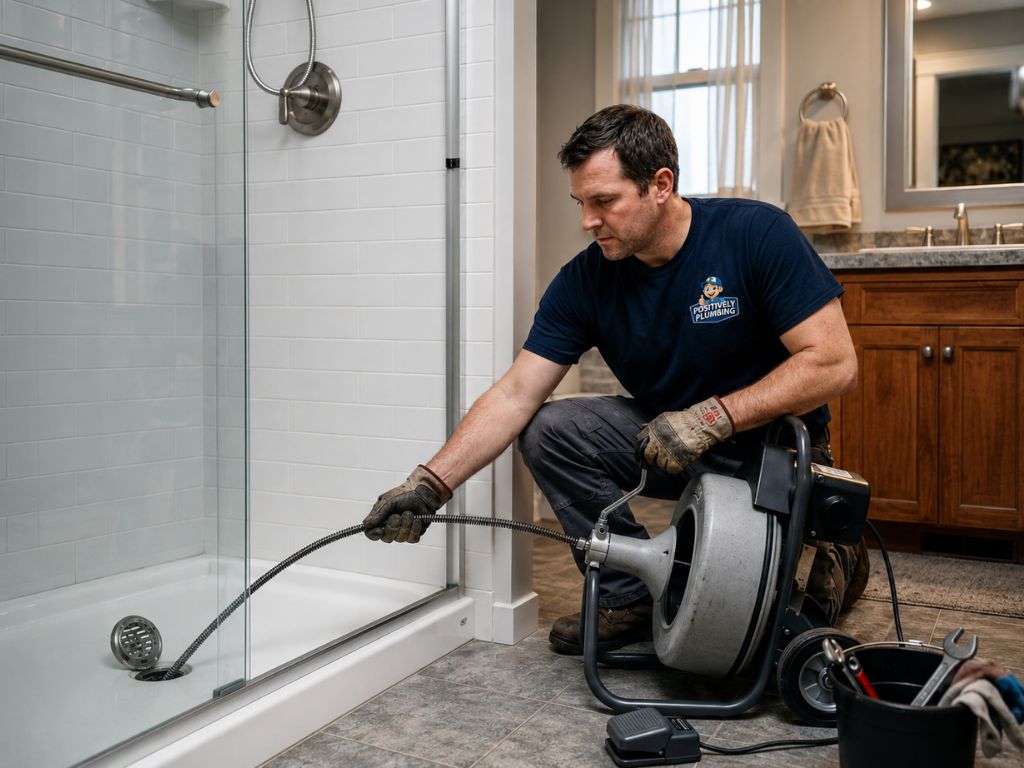
- Using a Drain Snake: For clogs lodged deeper in the P-trap, a manual hand snake or auger is highly effective. Gently feed the cable into the drain until you feel resistance. Rotate the handle clockwise to hook the clog, then slowly retrieve the cable to pull the debris out.
Why Does My Shower Drain Keep Clogging?
A shower drain that clogs again soon after you open it often has a cause past the drain cover. Plungers and hand snakes push a path through the clog, but they leave a layer of soap residue and hair on the pipe walls, and that layer catches new hair the next time you shower. The hard water scale covered earlier in this article adds to that rough surface, so the clog tends to rebuild in the same spot.
Two less obvious problems can bring a clog back as well. A sag in the drain line, sometimes called a belly, holds standing water where debris settles and builds up between showers. A blocked vent slows drainage and can make the drain gurgle, which gives hair and soap more time to stick to the pipe. Neither problem shows from the drain opening, so a plumber has to look at the line itself.
When we see a repeat clog, our team looks for the cause first and then picks the cleaning method that fits it. Hydro jetting scours residue and scale from the full width of the pipe, and a camera inspection shows whether a sag or damaged section is holding debris. You can see how we handle these jobs on our Drain Cleaning & Repair page.
When Should You Call a Professional for a Clogged Shower Drain?
While DIY methods are excellent for simple hair clogs, there are times when you need to put down the plunger and call in a professional plumber.
We strongly advise against using store-bought chemical drain cleaners. These products contain harsh, caustic acids that generate intense heat inside your pipes. With repeated use, they can warp PVC lines, corrode older metal pipes, and eat away at the watertight seals under your shower pan. Furthermore, they rarely clear the entire blockage, leaving a chemical-soaked puddle of standing water in your shower that makes future repairs hazardous.
You should contact a professional immediately if:
- Your DIY efforts fail: The water refuses to budge after plunging or snaking.
- You smell sewer gas: A persistent, foul odor indicates a dry, damaged, or improperly vented P-trap.
- You see black sludge: Decomposing organic matter or sewage backing up into your shower pan is a biohazard.
- Multiple drains are slow: This points to a deeper main line obstruction.
For reliable, honest service in Largo, Seminole, Clearwater, and throughout Pinellas County, our team at Positively Plumbing is always ready to help. You can reach out via our Emergency Plumbing page or schedule standard Plumbing Repairs.
Proactive Steps to Prevent Future Shower Clogs
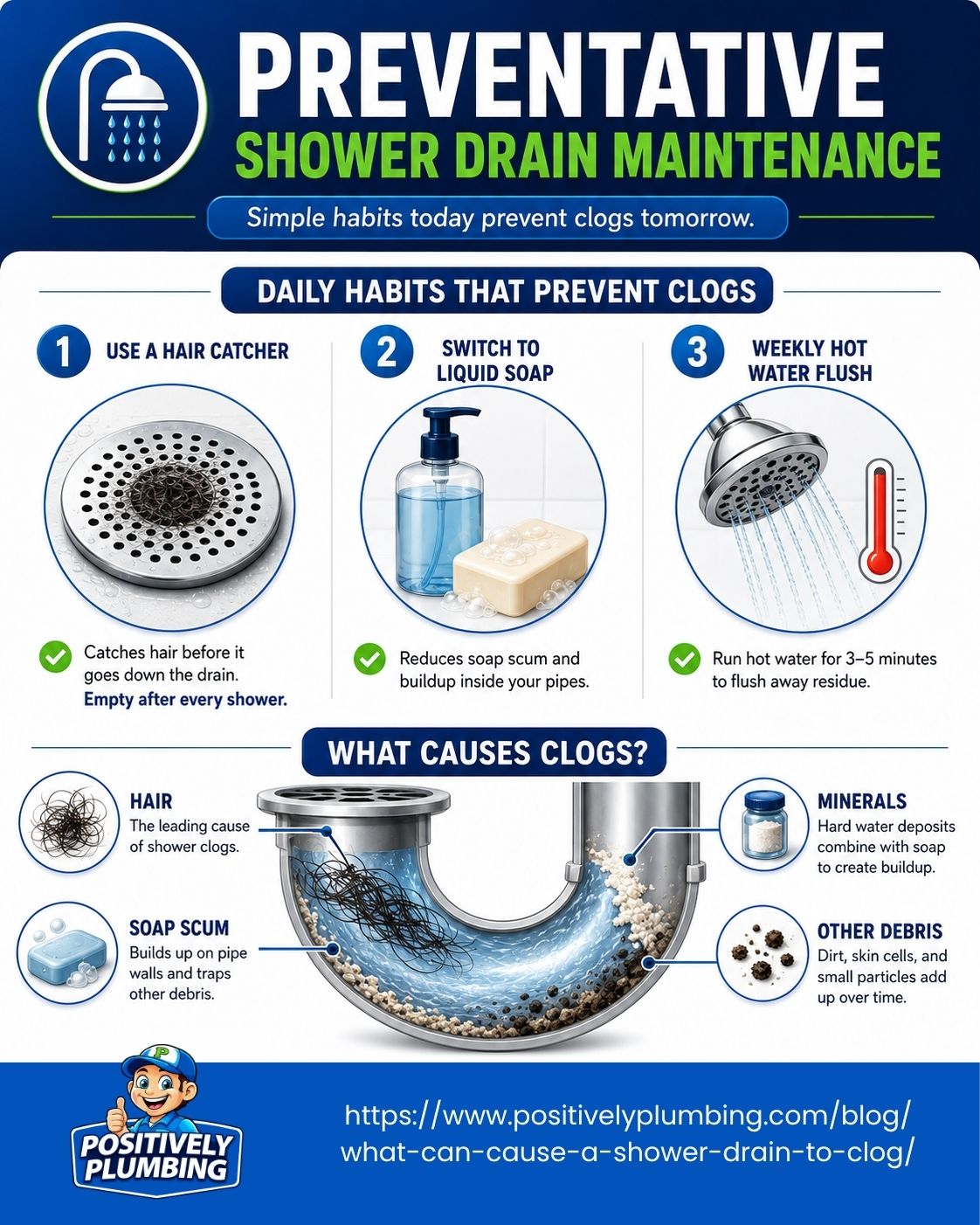
The best way to handle a clogged shower drain is to prevent it from happening in the first place. By incorporating a few simple habits into your household routine, you can keep your plumbing running smoothly for years to come:
- Install a Hair Catcher: A high-quality silicone or stainless steel mesh hair catcher (such as a TubShroom or a standard drain screen) is your first line of defense. It captures loose hair before it ever enters your plumbing. Just make sure to empty it after every shower!
- Switch to Liquid Soap: Traditional bar soaps contain binders and fats that react with minerals in the water to form heavy soap scum. Switching to liquid body wash or gel significantly reduces sticky buildup inside your pipes.
- Perform a Weekly Hot Water Flush: Once a week, run your shower on its hottest tap setting for 3 to 5 minutes to flush away fresh soap residue before it has a chance to solidify.
- Schedule Annual Maintenance: Just like your HVAC system, your home’s drains benefit from regular professional cleanings. An annual hydro-jetting or professional snaking keeps your lines pristine and prevents minor scale from turning into an emergency backup.
Ready for Drains That Flow Like New?
Still wondering what is causing your shower drain to clog? Positively Plumbing LLC can help you get a clear answer without pressure or guesswork. Our family-owned Largo team serves homeowners throughout Pinellas County with honest pricing, reliable workmanship, and drain cleaning solutions focused on fixing the real cause of the backup. If your shower is draining slowly, smells musty, or keeps backing up after DIY attempts, schedule Drain Cleaning & Repair with Positively Plumbing today and let us help your home’s plumbing flow the way it should.
