
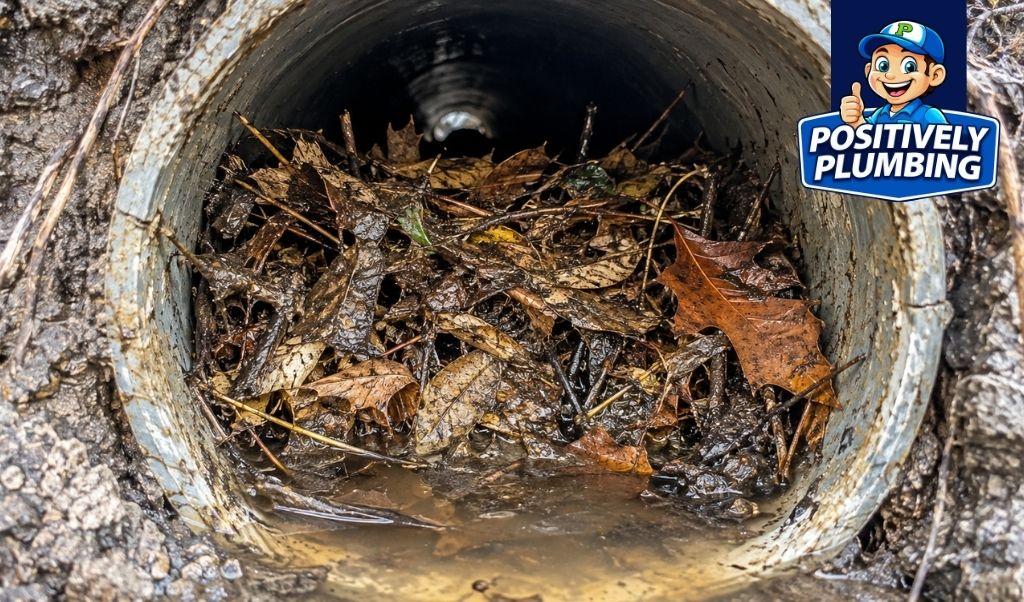
If a sewer backs up in your home, stop using water everywhere in the house immediately, keep everyone away from the affected area, and call a plumber. Every flush and faucet turn just adds to the mess already coming back up.
Heavy rain doesn’t create a blockage in your sewer lines. It finds one that was already building.
Your home’s sanitary sewer system is sealed off from the storm drains that handle rainfall, and the Environmental Protection Agency notes that sanitary sewers are designed to carry wastewater rather than the large volumes of stormwater a combined system handles. When a storm makes your indoor drains act up, that water is forcing its way through cracks, intrusive roots, or separated joints in a pipe that already had a problem.
This guide covers the early signs of a sewage backup, what to do in that crucial first hour, how the cleanup process works, what your homeowners insurance covers, and how to prevent it from happening again.
Signs a Sewage Backup Is Starting
A sewer backup usually gives you a little warning. Catching it early is often the difference between a standard service call and a full-blown emergency.
- Multiple slow drains at once. A single slow drain is usually just a local clog. If several plumbing fixtures start draining slowly at the same time, you’re looking at a main line issue.
- Gurgling sounds. You’ll hear air getting pushed back through the system as water struggles to get past a blockage.
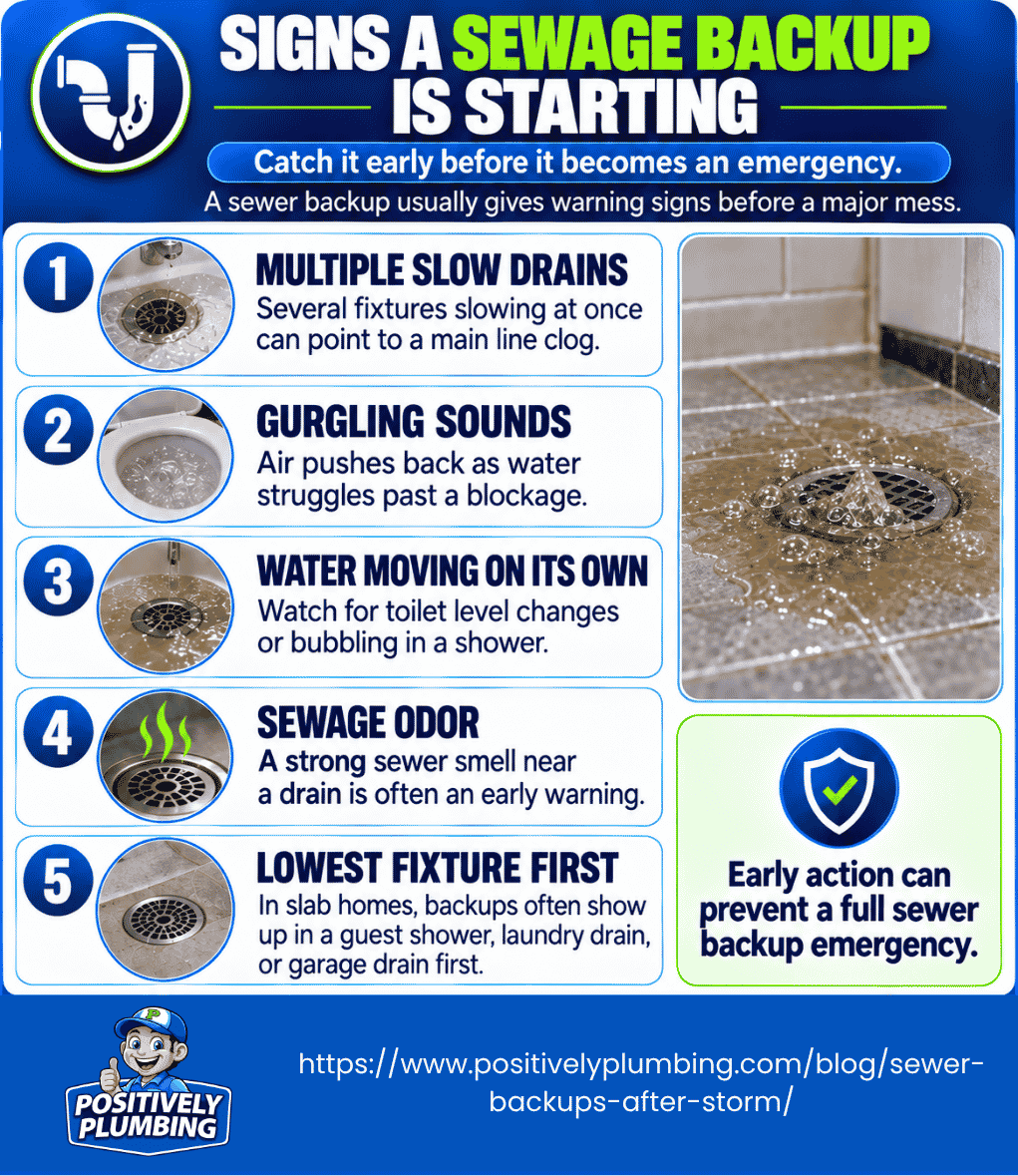
- Water rising where nobody ran it. Watch for a toilet bowl filling or dropping on its own, or water bubbling up in a shower.
- A sewage smell near a drain. This is often your first sign, and it usually shows up ahead of any visible water.
- The lowest fixture backs up first. In the Pinellas slab homes we service, it usually shows up first in a shower drain or around the base of a toilet.
The First Hour When a Sewer Backs Up
The order of your next steps really matters to keep the problem from escalating.
- Stop all water use. No flushing, no running sinks, no laundry, and no dishwashers. Walk through the house and tell everyone. Every single gallon sent down a drain has nowhere else to go but back into your home.
- Keep people and pets away. Raw sewage carries harmful bacteria and produces toxic gases. Close the door to the affected area if you can.
- Turn off electricity to the flooded area. If sewage has reached outlets, power strips, or anything plugged in at floor level, switch off the breakers for those rooms to avoid electrical malfunctions. If you aren’t sure which breaker covers what, turn off the main.
- Call a plumber and say “sewage backup.” Those specific words let us know it’s a health hazard with active damage, not just a slow drain. Our emergency plumbing line is (727) 625-0603, and we answer calls 24/7 with a response time within an hour.
- Photograph everything. Take wide shots of the room, close-ups of the damage, and the fixtures where water came up. Your insurance company will want to see the flooded area as it was, and that’s difficult to recreate once the cleanup team starts.
What Not to Do
When dealing with a sewage backup, taking the wrong step can quickly turn a manageable repair into a major health hazard or expensive home restoration. Avoid these common mistakes to prevent making the damage worse:
- Don’t flush again to see if it clears. It just sends more water into a system that can’t move it.
- Don’t pour drain chemicals down the pipe. They can’t eat through a main line blockage, so they’ll sit in the standing water and create a toxic hazard for whoever eventually opens the line.
- Don’t run a shop vacuum over raw sewage. Wet-vacuuming contaminated water sprays bacteria into the air. True sewage cleanup requires specialized equipment.
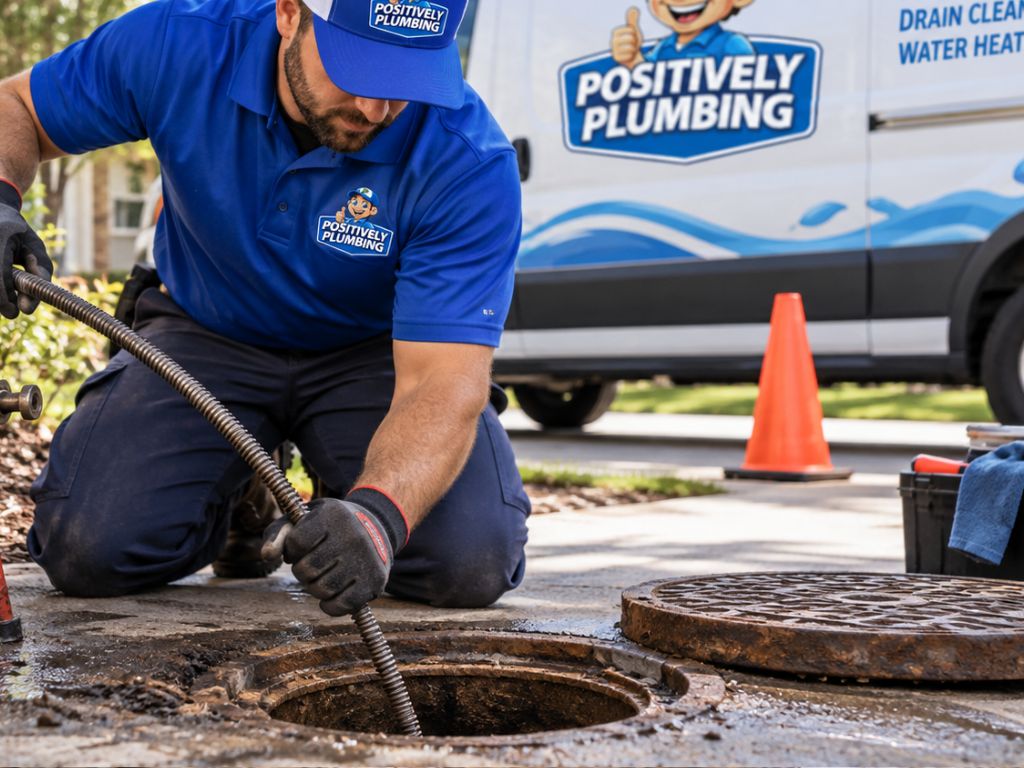
- Don’t snake the main line yourself. A main sewer drain is typically a four-inch pipe running from your house to the city connection. Clearing it requires a powered cable machine or heavy-duty jetting equipment. A flimsy hardware store snake will damage the pipe or the cleanout fitting.
- Don’t wait for the rain to stop. Since the rain didn’t cause the blockage, the end of the storm won’t fix it. A partial backup will turn into a full one.
What Causes Sewer Backups
Over the past year, we’ve run 78 drain and sewer calls, and most of the backups we clear trace back to aging pipe, rough burrs inside old cast iron lines, and “flushable” wipes and feminine products. The underlying cause determines the repair, which is why a video inspection after clearing the line matters just as much as the clearing itself.
1. Tree Roots
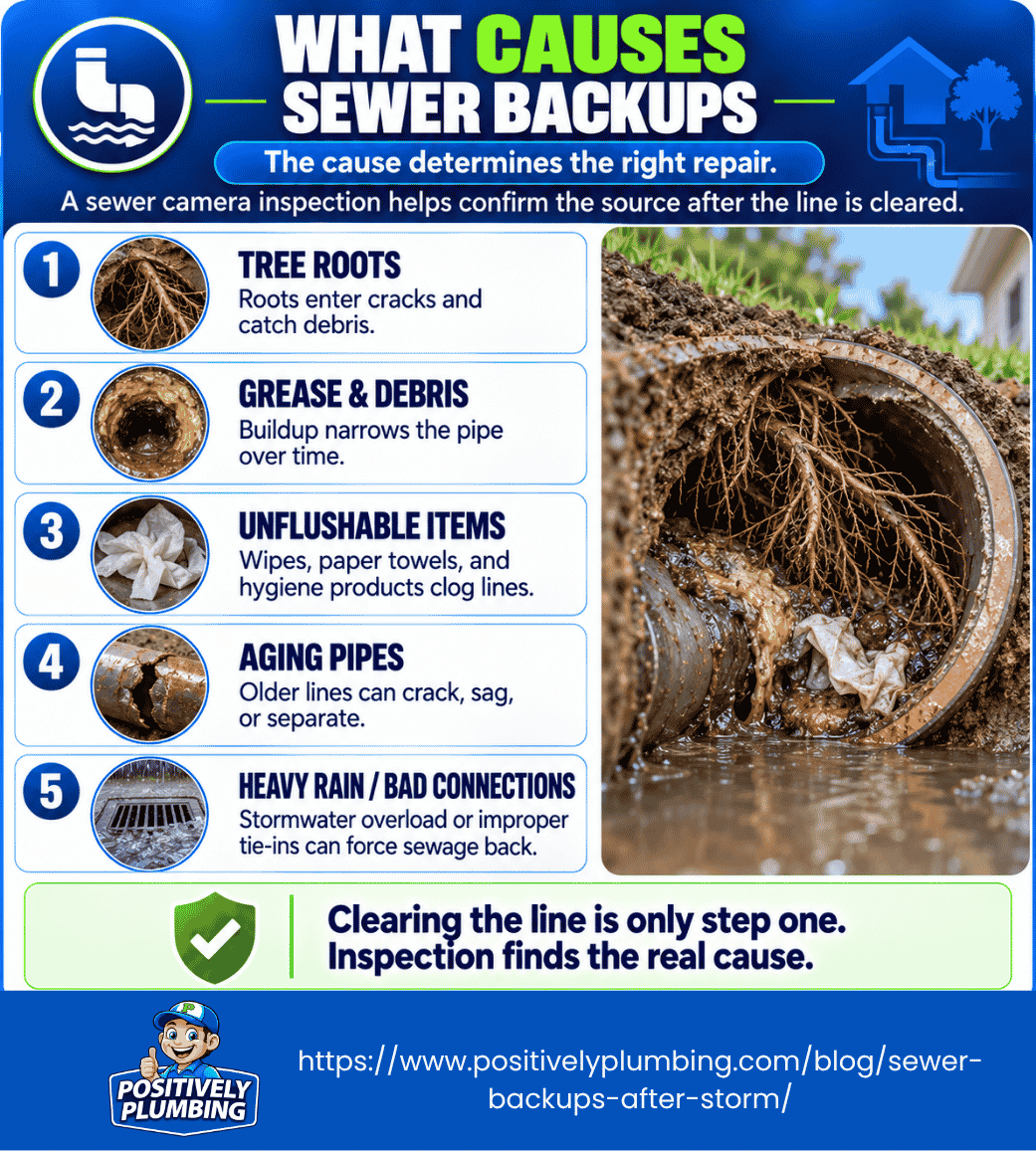
Roots seek out the moisture inside your sewer line, entering through tiny joints and cracks. They continue growing until they catch solid materials moving past. Our guide to tree roots in a sewer line covers how this develops and how to stop them from returning.
2. Grease and Debris
When you pour warm grease down a drain, it cools and coats the pipe walls. This narrows the pipe season after season until a blockage finally forms.
3. Unflushable Items
Paper towels, wet wipes, and feminine hygiene products don’t break down like toilet paper. Wipes labeled “flushable” are one of the most common blockages we get called out for.
4. Aging Sewage Systems
Older pipes naturally crack, sag, and separate at the joints. Clay and cast iron lines in older Pinellas neighborhoods have been working hard for decades. Pipe repair or replacement becomes the answer once the line itself starts failing. Inside older cast iron, rough burrs form along the pipe walls and catch wipes and paper as they pass, which is one of the most common blockages we clear.
5. Heavy Rainfall
When the municipal sewer system takes on more volume than it was built to handle, that pressure can push water back toward the lowest connections on the network. Our backup calls stay level throughout the year, so a storm tends to expose a line that was already struggling.
6. Stormwater Plumbing Connections
On some older properties, downspouts, yard drains, or other flood control systems were tied directly into the sanitary line instead of the storm system. This sends rainwater into a pipe built strictly for household waste, adding volume at the worst possible time. Removing these connections solves the underlying cause rather than treating a symptom.
What a Sewer Backup Costs
Fixing a sewer backup involves three distinct expenses, each driven by different factors:
- Clearing the line: A simple clog cleared through an accessible cleanout keeps costs low. Prices climb if the cleanout is hidden, the blockage is deep in the system, or hydro-jetting equipment is needed.
- Fixing the pipe: Expenses vary depending on the issue. Clearing a single root at a joint takes minimal labor compared to rebuilding a collapsed pipe. A camera inspection reveals which situation you’re dealing with.
- Restoring the home: Clean-up requires a specialized restoration team and its own invoice. Tearing out contaminated drywall, subflooring, and carpet routinely costs more than the actual pipe work.
Where the Homeowner’s Responsibility Ends
The sewer service line running from your house to the public sewer main is private, meaning maintenance falls entirely on you, the property owner.
In Pinellas County, the homeowner’s responsibility runs all the way to the city tap, where your service line connects to the public main. That includes the portion crossing the public right-of-way, a detail that often surprises homeowners who assume the city’s responsibility starts at the property line.
If a backup comes from a blockage or failure in your private service line, clearing, repairing, or replacing it is your responsibility. Replacing an aging line with new plastic pipe also helps keep tree roots out.
How the Clean Up Works
Sewage is the worst category of water damage, which makes the cleanup process entirely different from fixing a clean water leak.
- Porous materials have to go. Removing wet carpets and padding is essential, as is disposing of soaked upholstered furniture, mattresses, cardboard, and damaged wallboard. These materials absorb contaminated water deeply, and standard sanitizing can’t reliably reach all of it.
- Hard surfaces can be cleaned. Tile, concrete, vinyl, sealed wood, porcelain, and intact walls can be thoroughly disinfected by wiping walls and non-porous surfaces with a household bleach and water solution.
- Dry it properly. You’ll need industrial fans and dehumidifiers running in the affected area for two to three days. Moisture left behind in flooring and framing leads to mold and continuing sewer problems with air quality, especially in humid climates.
- Use certified professionals. Prompt cleanup carries severe health risks from bacteria and toxic gases. Restoration contractors certified by the Institute of Inspection, Cleaning and Restoration Certification work to the S500 standard and are trained and equipped for contaminated water.
- Address the problem immediately. Water sitting against wallboard and flooring does more structural harm every hour, so taking quick action limits long-term structural and drywall damage in your home.
Homeowners Insurance and Sewage Backups
This is where people often get caught off guard, so it’s worth understanding your coverage ahead of time.
Standard homeowners insurance usually excludes the sewer line itself. The pipe, the clearing, the camera inspection, and the repair are typically the homeowner’s expense, because policies treat sewer lines as part of the home’s aging infrastructure.
Backup damage inside the home, however, might be covered if you have a specific rider. Look for “sewer backup” or “water backup” coverage on your policy. It’s an add-on that covers damage to the home and your belongings when water or sewage backs up through the drains.
Keep detailed documentation. Take photographs at the start and after cleanup, keep the plumber’s invoice showing what was found, save remediation estimates, list all damaged items, and hold onto any receipts related to the work. Checking your policy while your pipes are working perfectly is the cheapest way to have this conversation.
How to Prevent Backups
When a main line backs up, the fix is rarely quick or cheap. While some causes are out of your control, taking a few proactive steps can keep your sewer pipes clear and protect your home from severe water damage:
1. Keep Grease Out of the Drain
Let it cool in a container and throw it in the trash. Avoid pouring hot water down the sink to clear grease, as it simply melts the fat further down the line where it cools and creates a blockage.
2. Flush Toilet Paper and Nothing Else
Paper towels, wet wipes, and feminine products belong in a bin.
3. Have the Line Inspected
A routine video inspection identifies deterioration or sewer line cracks in aging lines while it’s still a simple repair rather than a sewer emergency. It’s the only way to see what’s happening inside the pipe. We offer camera inspections as a standalone service, so you can have the line checked without waiting for a clog.

4. Install a Backwater Valve
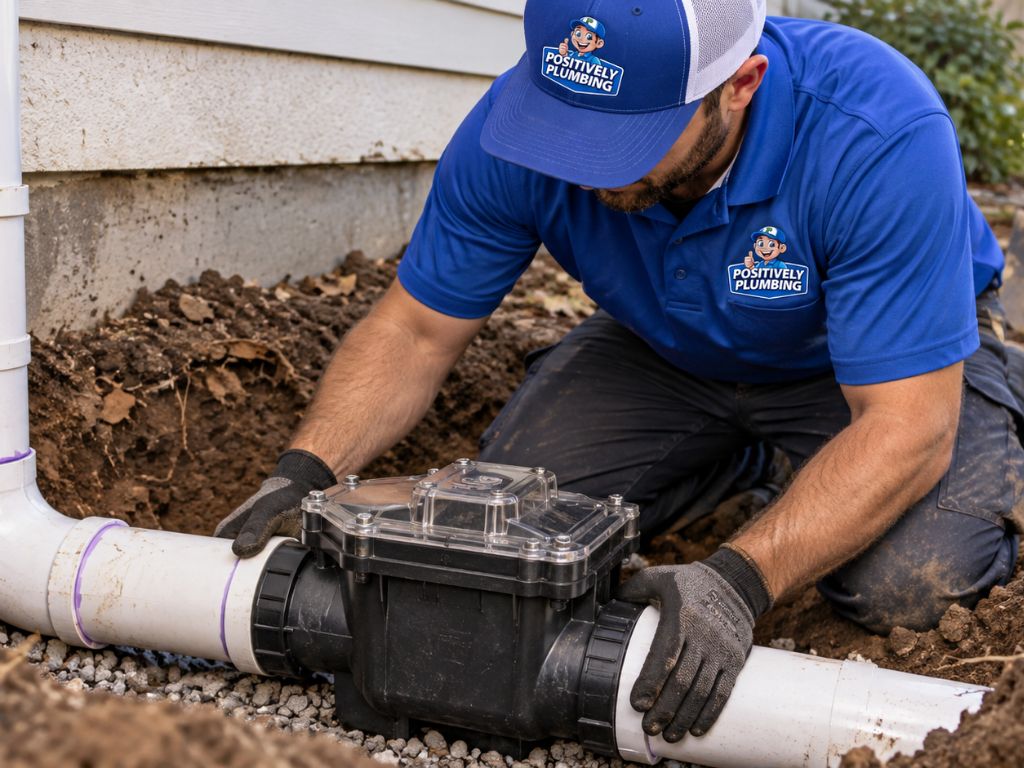
A sewer backwater valve allows flow out of the house but closes automatically against flow coming back in. This is your most direct protection against a backup originating in the city’s sewer system. Our team installs backwater valves for homeowners across Pinellas County.
5. Deal with Root Intrusion on a Schedule
If tree roots are a known issue on your property, scheduled drain cleaning helps prevent tree roots from building back into a full blockage.
6. Correct Illegal Plumbing Connections
If downspouts, yard drains, or sump pumps feed into your sanitary line, separating them removes excess volume from the system during the storms that cause trouble. Connecting French drains or other drainage systems to a sanitary sewer is often against municipal code, so taking steps to correct illegal plumbing connections helps prevent severe basement flooding. Keep drains clear of grease and large foreign objects.
Need Help With a Sewer Backup? Talk to Positively Plumbing
Positively Plumbing is a family-owned plumbing company based in Largo, serving homeowners across Pinellas County. Kevin Byrne manages our field operations and holds a custom home construction background alongside his plumbing license.
If your drains have started running slow, you’re hearing gurgling sounds, or something has come up where it shouldn’t, a look at the system will tell you whether it’s an isolated fixture problem or a main line issue.
Call us today at (727) 625-0603 or schedule a visit online. We answer calls 24/7 and respond within an hour, and we’ll get your drains flowing freely again with clear answers and quiet competence. Honest Work. Clear Answers. Positively Plumbing.
