
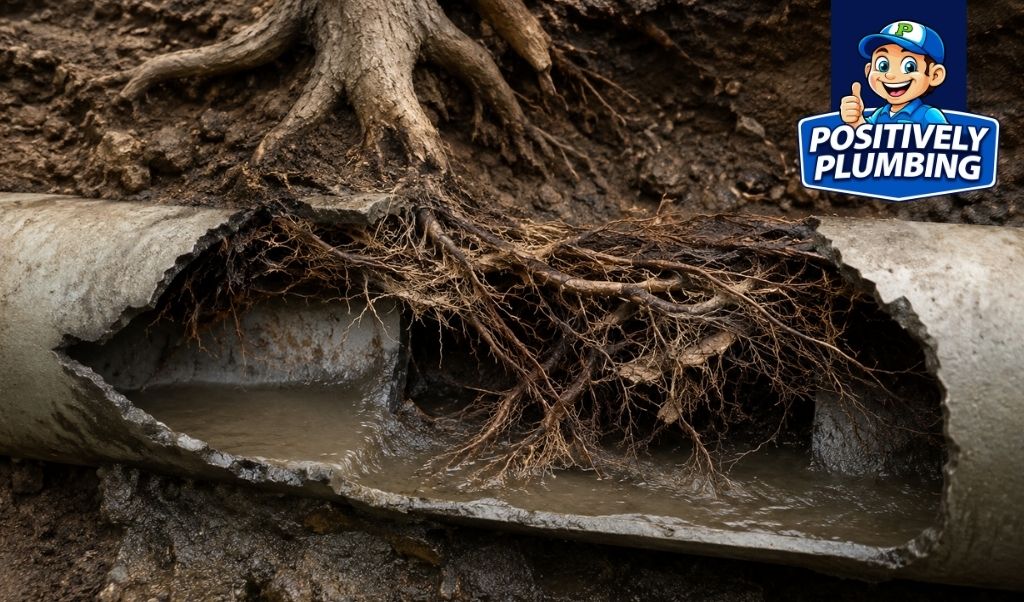
It often starts quietly: one slow drain, a toilet that gurgles after you run the shower, or a damp patch of grass that looks a little too green. But underground, roots may already be searching for moisture, slipping through a cracked joint, and growing inside the pipe. That is why you need to act before a minor warning sign turns into a sewage backup, yard damage, or an emergency repair.
Our team at Positively Plumbing can inspect the sewer line with a camera, confirm whether tree roots are causing the problem, safely clear the blockage, and explain whether a repair is needed to prevent the roots from returning. If you are wondering what to do next, this guide walks you through the warning signs, diagnosis, removal options, and prevention steps to help you protect your home with confidence.
If you have mature trees anywhere near your home in Pinellas County, root intrusion isn’t just possible; it’s likely. About 50% of all sewer backups and overflows are caused by tree roots. And the frustrating part? The problem builds slowly underground for years before you notice a single symptom.
By the time your drains are sluggish, or your toilet is gurgling, roots may already be well established inside your pipe.
I’m Stephanie Byrne, co-owner of Positively Plumbing in Largo, and we pull tree roots out of sewer lines across Pinellas County on a regular basis, in older clay pipes, cast iron lines, and everything in between. This guide walks you through exactly how we diagnose and solve it.
What Should Homeowners Know About Tree Roots in Sewer Line Issues?
Understanding how tree roots interact with your plumbing is the first step toward protecting your home. It isn’t a case of aggressive trees actively trying to break your pipes. Instead, it is a slow, natural process driven by survival.
How Do Tree Roots Get Into Sewer Line Systems?
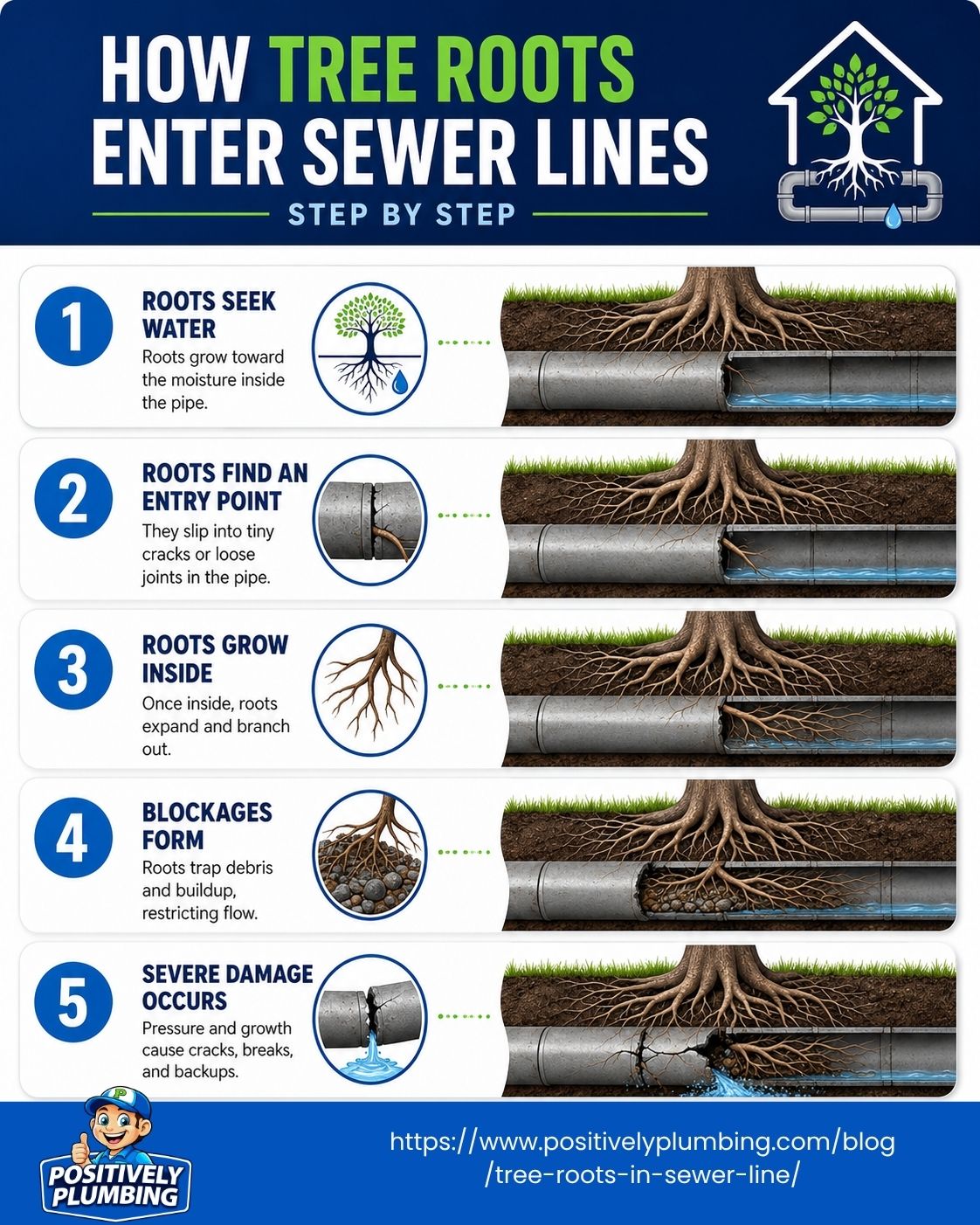
Trees are constantly on the hunt for resources. Your underground sewer line is essentially a buried treasure chest filled with warm, nutrient-rich water.
Pipes naturally release warmth, and as wastewater flows through them, microscopic amounts of moisture escape. This creates temperature differentials and moisture gradients in the surrounding soil. Vapor plumes of warm, humid air escape from tiny imperfections in the pipe.
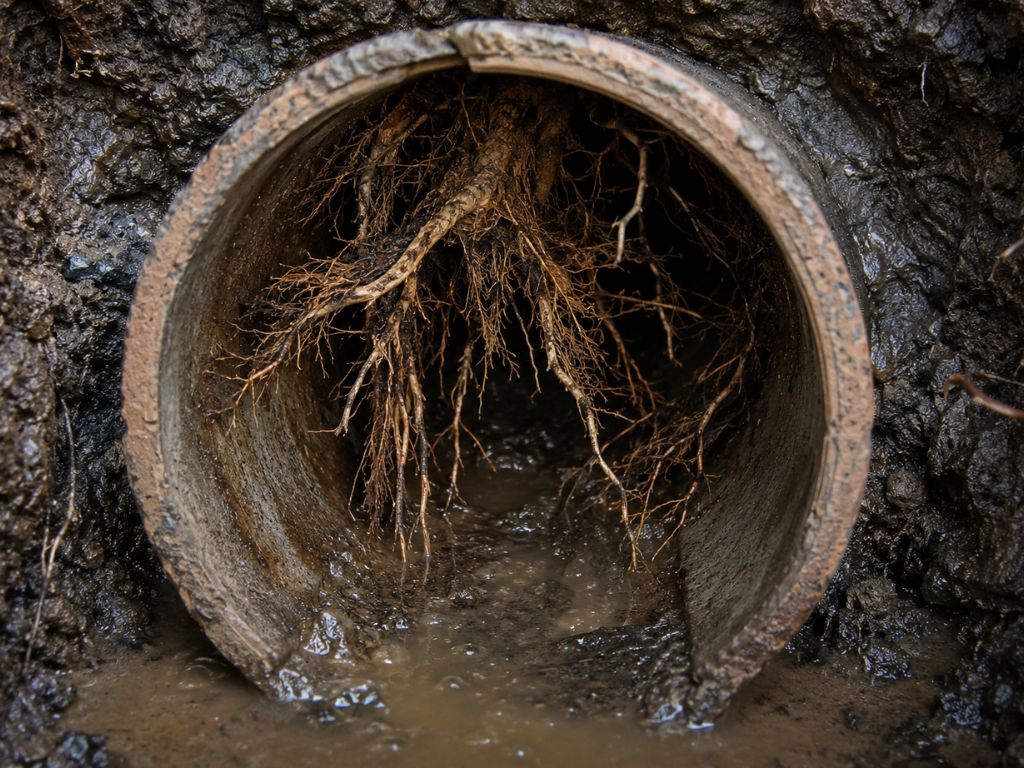
Tree roots have highly sensitive biological mechanisms that detect these moisture gradients. Once a root hair finds a microscopic crack, a loose joint, or a tiny pinhole, it squeezes inside. From there, the root enjoys a constant feast of water and nutrients, causing it to grow rapidly.
Over time, what started as a hairline fiber can grow into a massive root ball that completely fills the pipe. If you have a septic system on your property, this same process can quickly ruin your tank or drainfield, as detailed in this guide on Tree Roots in Your Septic System: Signs, Fixes, and Prevention.
What Are the Early Warning Signs of Tree Roots in a Sewer Line?
Because this process happens entirely underground, it is easy to ignore until a major backup occurs. However, your plumbing will usually try to warn you first. Recognizing the causes of root intrusion and acting early can save you thousands of dollars in emergency repairs.
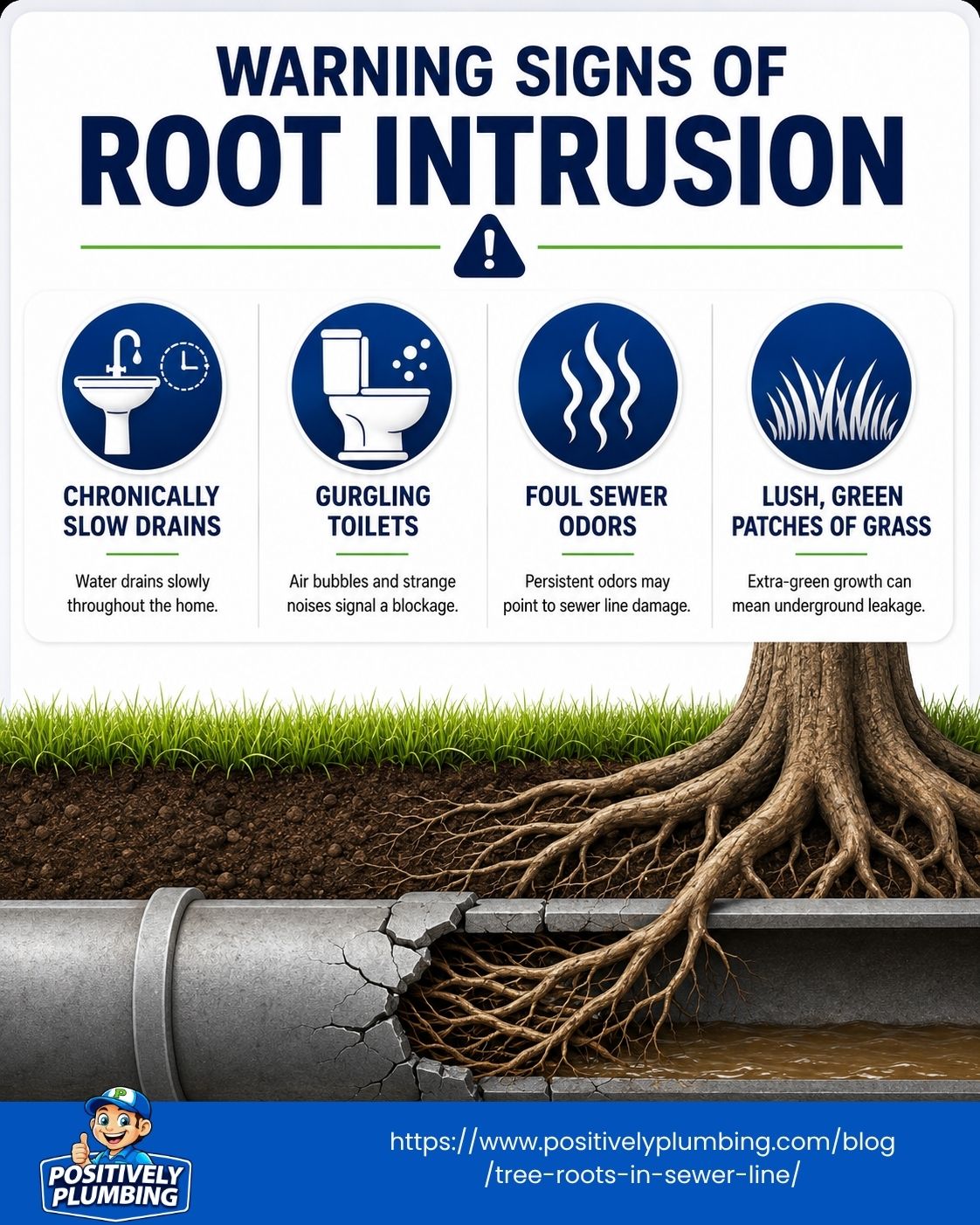
Keep an eye out for these early warning signs:
- Chronically slow drains: Sinks, tubs, and showers across your entire home that drain slowly, even after you use a plunger.
- Gurgling toilets: Strange bubbling or gurgling sounds coming from your toilet bowls when you run water elsewhere in the house.
- Foul sewer odors: Persistent sewage smells inside your home or near your outdoor cleanouts.
- Lush, green patches of grass: Unusually vibrant, fast-growing patches of lawn directly over your sewer lateral’s path.
- Unexplained sinkholes: Soft, sunken spots or depressions developing in your yard.
If you notice any of these symptoms, it is time to skip the chemical store-bought drain cleaners and call in the professionals. Standard chemical pour-ins rarely help with solid root blockages and can actually damage your pipes. Instead, scheduling a professional Drain Cleaning & Repair service is the safest way to diagnose and clear the line before a complete backup forces your hand.
Which Pipe Materials Are Most Vulnerable to Tree Roots in a Sewer Line?
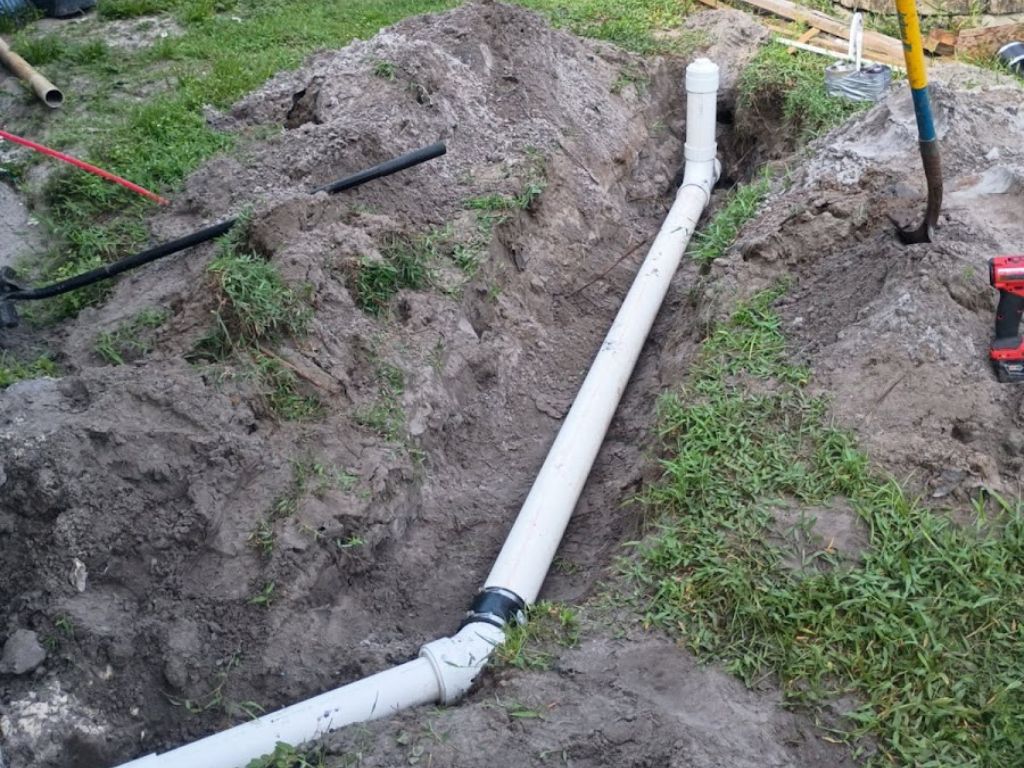
The material of your sewer line plays a massive role in how vulnerable your home is to root intrusion. Older homes in our Pinellas County service areas, such as Belleair, Seminole, and St. Petersburg, often feature legacy pipe materials that are highly susceptible to root damage.
Roots do not typically crack healthy, modern pipes. Instead, they exploit existing structural weaknesses, loose joints, and material degradation. Once inside, they grow and expand, exerting over 150 PSI of pressure. This pressure is easily strong enough to break apart older pipe materials.
| Pipe Material | Vulnerability Level | Common Failure Points | How Roots Progress |
|---|---|---|---|
| Clay Tile / Terracotta | Extremely High | Mortar joints degrade, crack, and shift | Roots enter the short, unsealed 10-foot sections and quickly expand, shattering the clay. |
| Orangeburg (Bituminized Fiber) | Extremely High | Deforms, flattens, and rots over time | Roots easily bite through the soft, coal-tar-impregnated wood fiber walls. |
| Cast Iron | High | Rusts, scales, and cracks along the bottom | Roots exploit rust holes and deteriorated joints, eventually splitting the pipe. |
| PVC / ABS Plastic | Very Low | Glued joints (only if poorly installed) | Smooth, solid walls are nearly immune to roots unless a joint leaks or physical ground shifting cracks the plastic. |
Understanding the long-term structural threats of these materials is key to protecting your home’s value and preventing sudden, messy backups.
How Should You Remove Tree Roots From a Sewer Line and Prevent Them From Coming Back?
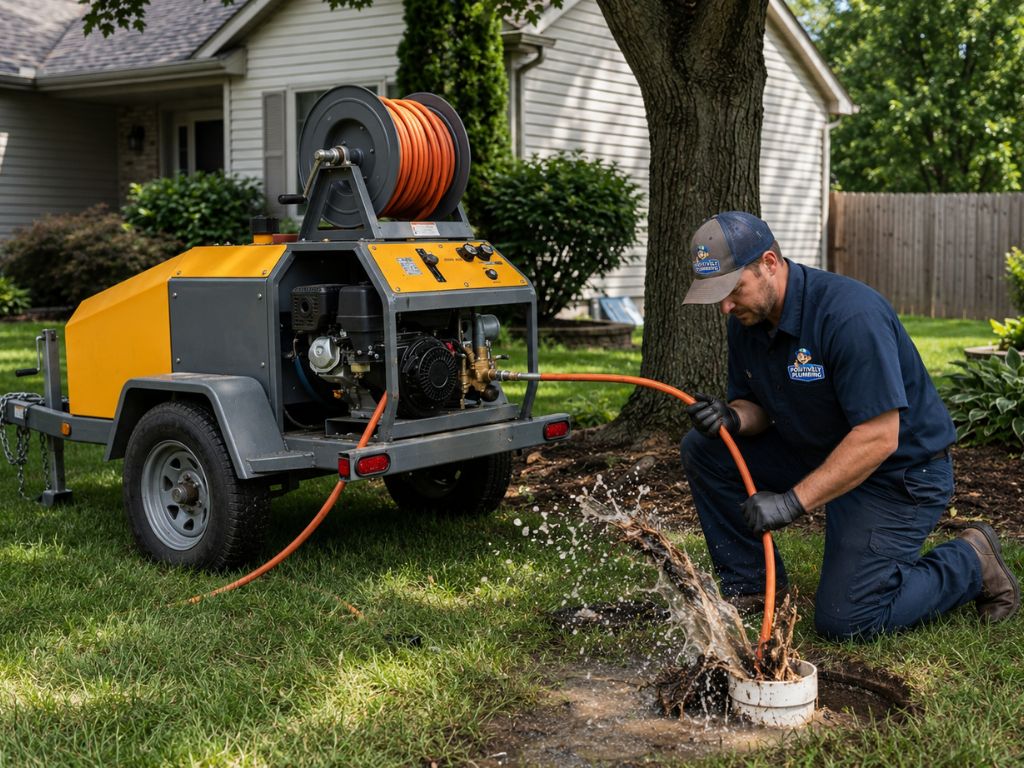
When roots invade, a simple DIY snake from a rental shop usually won’t cut it. Homeowner-grade equipment often just punches a temporary hole through the root mass, leaving the main structure intact to grow back even thicker.
Effective Methods for Removing Root Obstructions
At Positively Plumbing, we use a layered approach to clear the line safely without causing further structural damage:
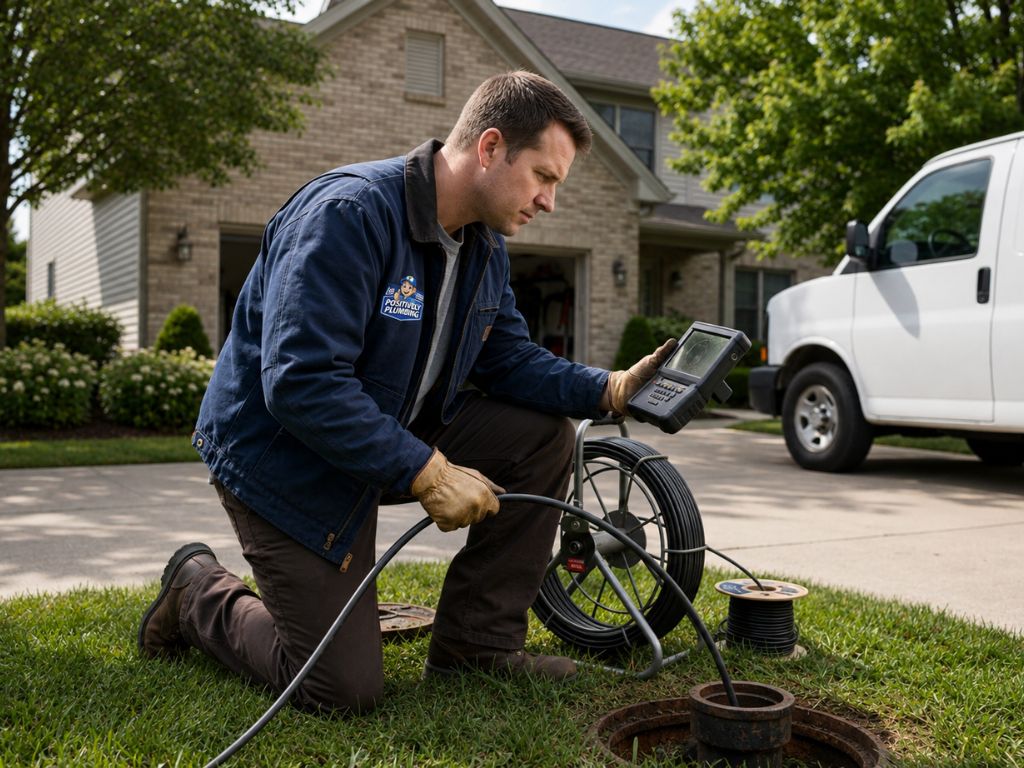
- Sewer Camera Inspection: Before we do anything, we run a high-definition camera down your line. This lets us see exactly where the roots are entering, how dense the blockage is, and whether the pipe is still structurally sound.
- Mechanical Augering (Snaking): For tough, woody roots, we use specialized cutting heads that match the exact diameter of your pipe. This allows us to physically slice through the root mass and scrape the pipe walls clean.
- Hydro Jetting: This is our preferred method for thorough cleaning. We blast the inside of your sewer line with high-pressure water (between 3,000 and 5,000 PSI). Hydro jetting doesn’t just cut the roots; it completely flushes out all remaining debris, grease, and scale, restoring your pipe’s full flow capacity.
- Foaming Root Inhibitors: Once the pipe is clear, we often recommend applying a professional-grade foaming root killer like RootX. The foam coats the top and sides of the pipe where roots enter, killing remaining root ends and preventing regrowth for up to a year.
For immediate help with a backed-up line, our Plumbing Repairs team is ready to assist. This multi-step approach ensures that your pipes are thoroughly cleared and prepared for long-term protection.
What Is Positively Plumbing’s Root Removal Process?
When you call Positively Plumbing because you suspect that you have tree roots in a sewer line, we follow a clear, careful process designed to remove the blockage, protect your pipe, and help you understand what needs to happen next:
- We listen to your symptoms first: Our team starts by asking what you are seeing at home, such as slow drains, gurgling toilets, sewer odors, or repeated backups.
- We inspect the sewer line with a camera: A sewer camera helps us confirm whether roots are inside the pipe, where they entered, and whether the line is cracked, offset, or collapsing.
- We explain the findings clearly: Before any major work begins, Positively Plumbing walks you through what we found, what it means, and which removal option makes the most sense for your home.
- We remove the root obstruction: Depending on the pipe condition, we may use professional cutting equipment, mechanical augering, or hydro jetting to clear the root mass and restore flow.
- We flush and recheck the line: After removal, we confirm the pipe is flowing properly and look for remaining debris, grease, scale, or root fragments that could cause another blockage.
- We recommend prevention or repair when needed: If roots entered through a damaged section, we explain whether foaming root inhibitor, scheduled maintenance, pipe lining, or pipe replacement is the best long-term solution.
The goal is not just to clear the sewer line for today. It is to give you honest, no-pressure guidance so you can decide how to keep roots from coming back and avoid a bigger plumbing emergency later.
When to Repair or Replace Damaged Pipes?
While clearing the roots restores flow, it does not fix the hole they crawled through. If your pipe has structural damage, the roots will return, often faster and denser than before. If left untreated, root intrusion can eventually lead to a complete collapse of the sewer system.
When a camera inspection reveals cracked, broken, or collapsed sections, we must transition from cleaning to structural solutions. Fortunately, we offer advanced Pipe Repair & Replacement options:
- Trenchless Pipe Lining (CIPP): If the pipe is structurally stable but has joint leaks or cracks, we can install a cured-in-place pipe liner. This creates a seamless, joint-free “pipe within a pipe” that completely seals out roots for 50+ years without tearing up your landscaping.
- Traditional Excavation: If the pipe has completely collapsed or has severe “bellies” (sagging sections), we will carefully excavate and replace the damaged section with modern, root-resistant PVC.
It is also important to know who is responsible for the repairs. Under local municipal codes, Pinellas County homeowners are responsible for maintaining and repairing their private sewer lateral all the way to the connection point at the city main. For details on local policies, consult the Private Sewer Lateral Program Frequently Asked Questions. If you live in coastal areas like Indian Rocks Beach, understanding how these lateral programs operate is essential for planning any necessary repairs.
How Can You Prevent Tree Roots From Growing Back Into a Sewer Line?
Preventing root issues is always more affordable than dealing with a flooded home. If you want to keep your sewer line flowing smoothly, follow these proactive landscaping and maintenance tips:
- Know Your Sewer Layout: Before planting anything new, map out your sewer line. Keep all major trees and large shrubs at least 30 feet away from the line.
- Choose Smart Landscaping: If you must plant near your sewer line, choose slow-growing species with non-aggressive root systems, such as small palms, flowering dogwoods, or Japanese maples. Avoid water-hungry giants like willows, ficus, and silver maples.
- Install Physical Root Barriers: If you have existing trees near your line, we can install solid HDPE root barriers at least 24 to 30 inches deep to redirect root growth away from your pipes.
- Schedule Biennial Camera Inspections: Having our team perform a quick sewer camera inspection every two years is the single most cost-effective way to catch root intrusion early, before it becomes an expensive emergency.
Suspect Tree Roots in Your Sewer Line?
If you’re searching for tree roots in your sewer line because you see your drains are slowing down, your toilet is gurgling, or you are worried about a hidden sewer backup, you deserve a clear answer before the problem gets worse. In this guide, we covered how roots find their way into small pipe openings, the warning signs homeowners should not ignore, the pipe materials most at risk, and the professional removal and prevention options that can protect your home.
At Positively Plumbing, we combine honest pricing, no-pressure guidance, and reliable workmanship to help Pinellas County homeowners make confident decisions about sewer line problems. If you think tree roots may be growing inside your sewer line, schedule a professional Sewer Repair service or camera inspection today and let our friendly local team help keep those roots in the yard where they belong.
