


A whole-home repipe replaces the supply lines feeding every fixture in your house. The work follows a specific order: assessment and routing, protecting the home, opening access, running new lines, connecting fixtures, pressure testing, inspection, and patching.
This guide covers each stage, explains how slab construction changes the routing approach, details what Pinellas County water means for your plumbing materials, and outlines how to prepare your home.
What a Repipe Replaces
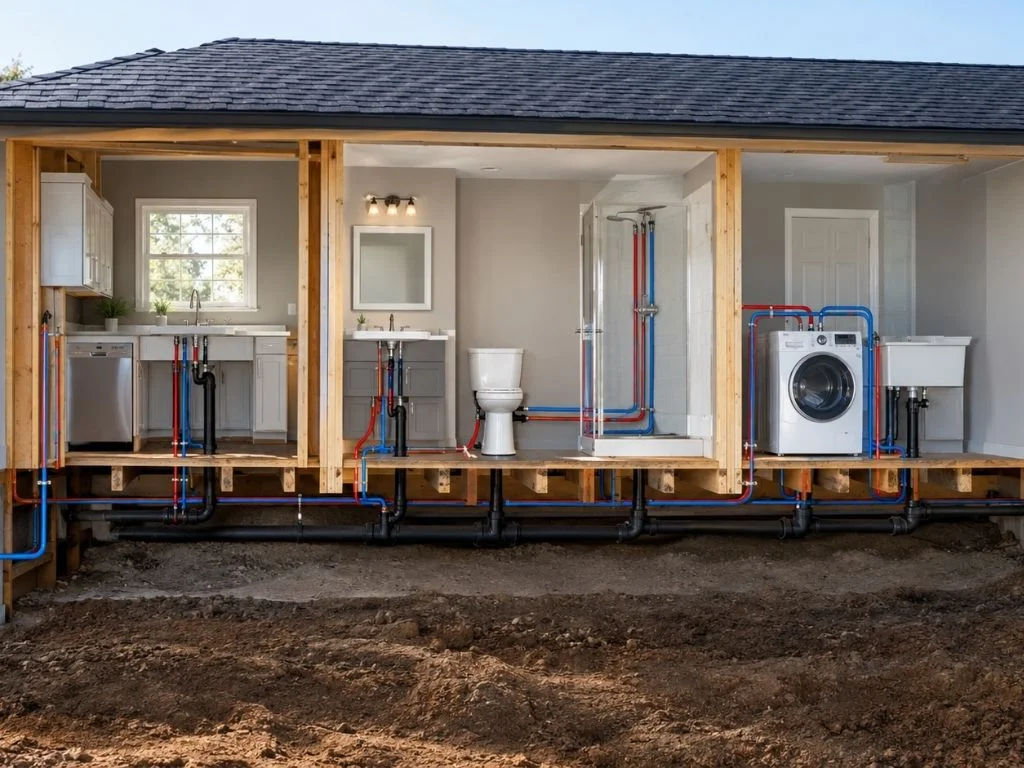
A repipe replaces the water supply piping, which includes the lines carrying water from the meter to every faucet, shower, toilet, washing machine, and water heater. Drain and waste lines operate as a separate system and stay where they are.
Supply pipes tend to reach the end of their lifespan across the entire network at once. Galvanized steel corrodes along its full length, narrowing the water flow and causing discolored water at multiple taps.
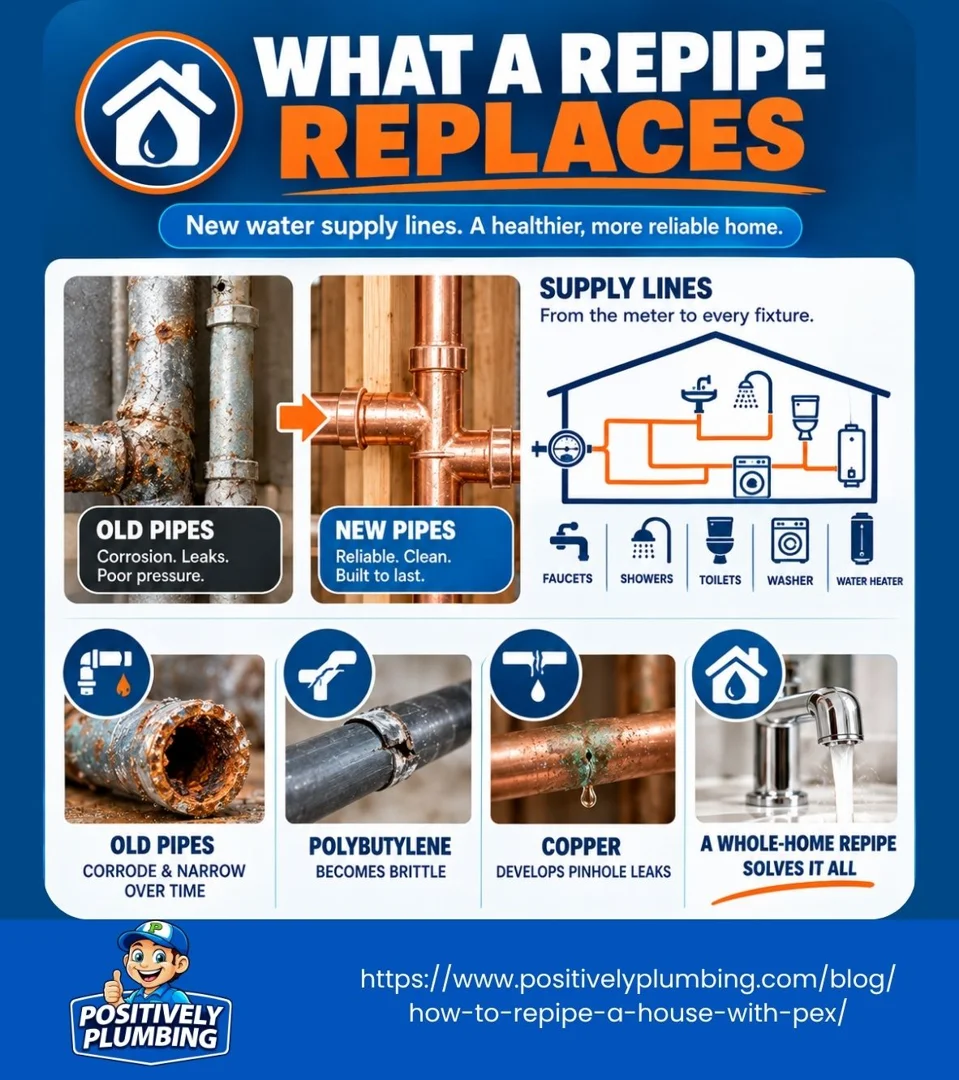
Polybutylene piping becomes brittle and fails at the fittings. The International Association of Certified Home Inspectors dates its manufacture for home plumbing from 1978 to mid-1995 and estimates that up to 10 million homes in the United States were plumbed with it during that period. Copper, experiencing pinhole corrosion, regularly develops new leaks a short distance from previous repairs.
That pattern explains why replacing a single pipe section seldom solves the underlying problem. The weakness exists throughout the system, so the next failure appears somewhere else. A whole-home repipe addresses the entire network at once, and the result is steady water pressure at every fixture and water without discoloration at the tap.
The Stages, Start to Finish
The project follows a predictable sequence, with each step setting up the next.
- Assessment and routing. A plumber walks the home, counts every fixture and appliance needing water, and locates the existing runs. From there, the team plans the route for the new lines through the attic, the wall cavities, and any other accessible areas. Strategic routing minimizes the number of access holes required.
- Protecting the home. Technicians lay drop cloths and plastic sheeting along all work paths. The crew covers or moves furniture near the affected walls and protects the floors under any access points. Since repiping produces drywall dust, containment comes first.
- Shutting off water and opening access. The team shuts off the main water valve and cuts small openings in the drywall where lines require threading or connections. These openings sit near fixtures, inside closets, and along stud bays.
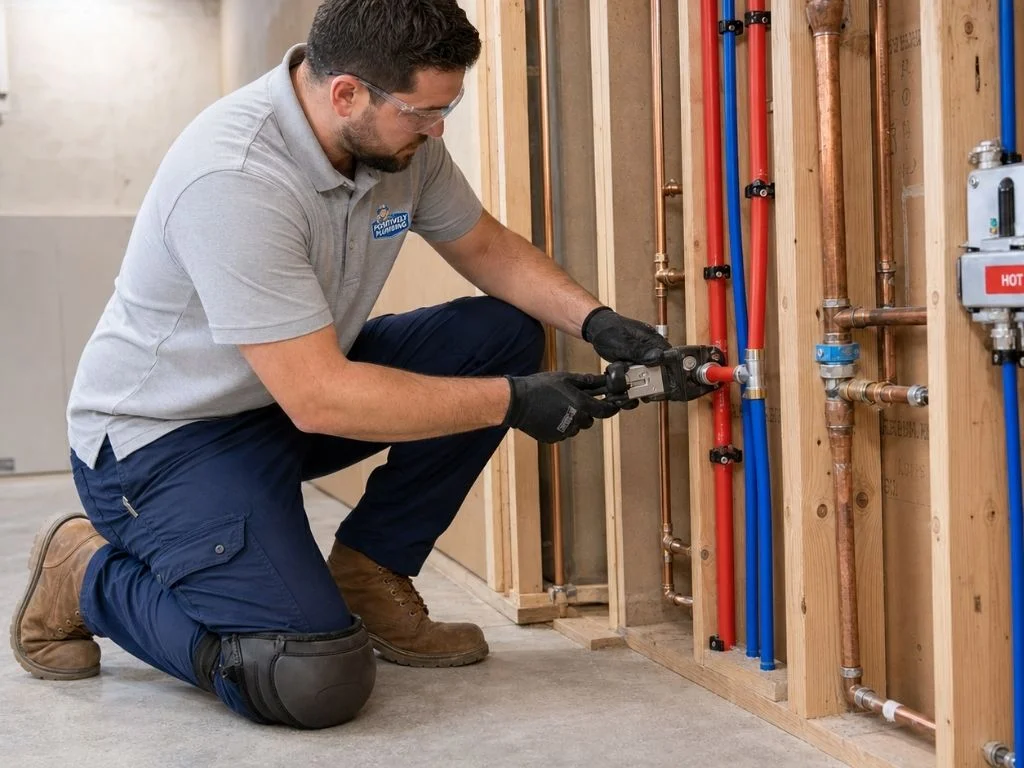
- Running the new lines. The plumbers pull new supply lines to every fixture. PEX is flexible enough to route through framing with fewer joints, which reduces the need to open walls. This phase takes the most time and generates the most noise.
- Connecting fixtures and the water heater. The technicians tie each line into its fixture using material-rated fittings and install or replace shutoff valves along the route. The water heater is reconnected at both the cold inlet and the hot outlet.
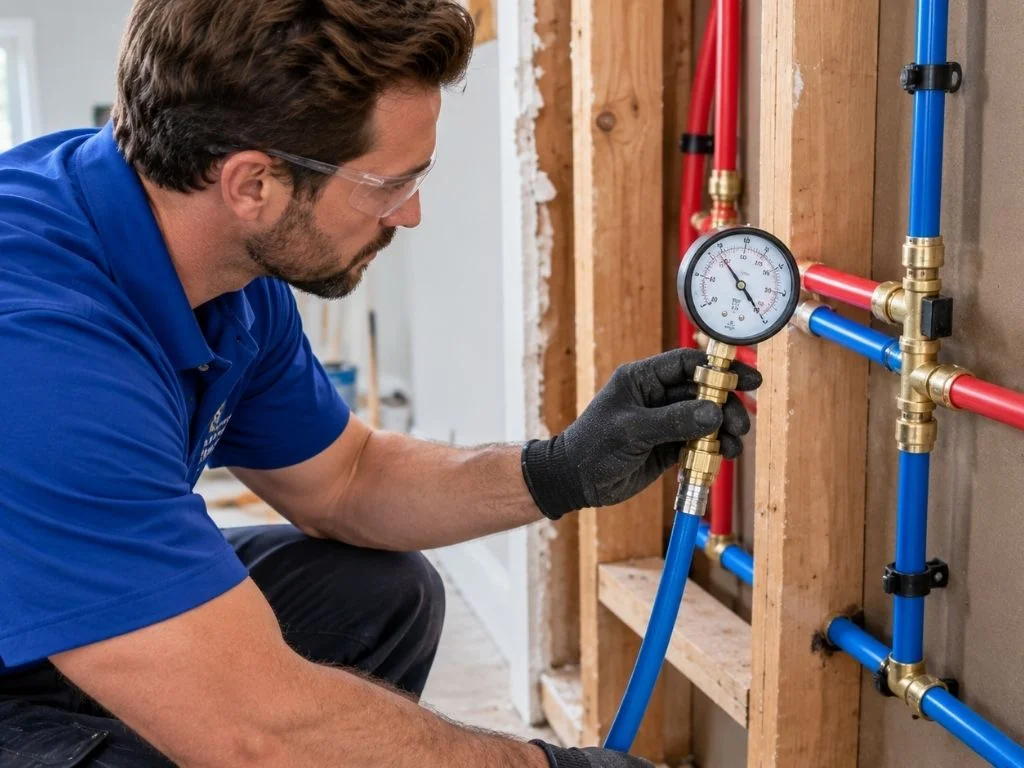
- Pressure testing. The crew caps and pressurizes the new system while the walls remain open, watching for any pressure loss. Testing at this stage allows the team to correct a weak joint while it remains accessible.
- Inspection. Where local requirements call for an inspection, a building official reviews the open work prior to patching. Requirements vary across municipalities, and your plumbing contractor handles the permitting and schedules the visit.
- Patching and restoring water. The team closes the access holes, turns the main water supply back on, and flushes the lines to remove debris. Every fixture is then checked for flow and leaks.
Why Slab Construction Shapes the Routing Here
Most Pinellas County homes sit on a concrete slab with no basement, which removes a routing option that plumbers in other regions rely on.
In a house with a crawlspace or a basement, supply lines run underneath the floor and rise to each fixture. On a slab foundation, concrete buries that route. New lines go up into the attic, travel across the house overhead, and drop down inside the wall cavities to reach each fixture.

This overhead approach introduces a few practical realities. Attic access matters more here, since the crew spends much of the project working in that space. Wall openings tend to sit higher and nearer the ceiling, where the new lines drop down. And a single-story home is generally a more straightforward project than a two-story layout, since every ground-floor line in a two-story house has to pass through the upper floor.
It also explains why the original pipes in a slab home usually stay where they are, which is covered further down. Where a buried line has already failed, that becomes a slab leak question with its own repair.
What Opening a Wall Can Turn Up
Cutting into the walls of an older home occasionally exposes more than outdated piping. Wall cavities frequently carry electrical wires and gas lines alongside the plumbing, and homes built through the 1970s may contain asbestos in the wall materials.
The Environmental Protection Agency advises having a home inspected by a trained and accredited asbestos professional when planning work that could disturb building materials. A licensed crew tests for those conditions and works around them, which is one of the differences between a plumbing contractor and a general handyman on this kind of job.
Kevin Byrne, who manages our field operations, came to plumbing from custom home construction, so the structural side of opening a wall is familiar territory.
The Water Question: Chloramine in Pinellas County
Homeowners researching PEX frequently wonder how the material performs against chlorinated water. It is a fair question with a specific local answer.
Pinellas County Utilities changed its disinfection process from chlorine to chloramine in 2002. Chloramine combines chlorine with ammonia, and it is what reaches most taps in the county for most of the year.
Twice a year, Pinellas County Utilities switches back to free chlorine for roughly three weeks to reduce the potential for coliform and other bacteria forming in the distribution system. These maintenance windows are announced in advance and affect water customers across the county.
So the picture for a Pinellas home is chloramine most of the year with two shorter free chlorine periods. That context matters when comparing pipe materials, because the resistance figures published by manufacturers tie to the type and concentration of the disinfectant. Our comparison of PEX and copper covers how the two materials differ, and our guide to hard water covers the mineral side of local water.
What Happens to the Old Pipes
The old supply lines typically stay inside the walls, capped and abandoned.
Pulling them out requires opening considerably more drywall than the repipe itself needs, which adds patching work for no functional gain. Once a line is disconnected at both ends and drained, it sits there harmlessly.
In a slab home, any original lines running underneath the concrete stay there permanently. The new system routes overhead and bypasses the old one.
What the Crew Leaves Behind
Drywall restoration practices differ across the plumbing industry. Some repipe crews patch and finish the holes ready for paint. Other companies close the openings to a rough stage and leave the finish work to a drywall or painting contractor.
Asking your chosen plumbing company where their restoration work stops is worth doing, since the answer determines whether you need a second contractor lined up.
How to Get Your Home Ready
A little preparation shortens the timeline and lowers the disruption to your routine.
- Open up the walls. Move furniture, boxes, and shelving away from the walls flagged during the assessment. Clearing the spaces inside closets, around laundry areas, and near the water heater gives the crew easier access, which means fewer and smaller drywall openings.
- Plan for the water being off. Fill pitchers the evening ahead and plan meals that need no running water. If anyone in your household requires water on hand for medical reasons, tell the crew early so they can sequence the shutoffs around it.

- Cover what you care about. Containment goes down, and fine dust still travels. Cover or relocate electronics and delicate items near the work areas.
- Set up a room for pets. Doors open and close throughout the day. A quiet room away from the work paths, with the door shut, keeps a nervous animal from slipping outside.
- Ask about the finish plan. Confirm where the drywall work stops so you can line up a painter if your walls need one.
Frequently Asked Questions
Can We Stay in the House During the Work?
Most households do. The water turns off during working hours and comes back on at the end of the day, so evenings and overnight are normal.
Does a Repipe Include the Drains?
A repipe covers the supply side. Drain and sewer lines are a separate system with separate work.
How Long Does It Take?
The timeline depends on the size of the home, the number of fixtures, and how accessible the attic is. A single-story home with good attic access moves faster than a two-story layout. Your estimate carries a day count based on your floor plan.
What Does a Repipe Cost?
It depends on the size of the home, the fixture count, and the access. Our guide to the cost to repipe a house covers the factors, and an on-site assessment gives you a figure for your property.
Why Are the Old Pipes Still in the Walls?
Removing them requires opening considerably more drywall. Once capped and disconnected, they sit inside the wall cavities without affecting anything.
Does Pinellas Water Affect Which Material I Should Choose?
Local water chemistry is worth considering. The county runs chloramine for most of the year and switches to free chlorine twice annually, and pipe materials carry resistance ratings tied to those conditions. Ask any plumber what material they install and what its rating is.
Talk to Positively Plumbing About Your Repipe
Positively Plumbing is a family-owned plumbing company based in Largo, serving homeowners across Pinellas County. Kevin manages field operations and brings a custom home construction background to any project involving structural wall access.
If you have had more than one leak in different parts of the house, or the water has started running discolored, an assessment establishes whether the problem involves a single section or the entire network. Knowing the scope puts the timing back in your hands.
Call (727) 625-0603 or schedule a visit, and we can walk the house with you.
