
Benefits of Copper Pipes: Is Copper Repiping Worth It in Pinellas County?
Homeowners in Old Northeast, coastal Pinellas neighborhoods, and HOA-managed properties usually reach the same fork in the road: the plumbing needs replacing, and the first real decision is copper or PEX. Both are approved for drinking water and widely used, making the choice harder than it looks.
The two materials suit different homes. Copper rewards a long hold and handles exposed runs, though it is sensitive to acidic water. PEX costs less and installs faster, but it cannot go outdoors. Most homeowners make this call once, and the trade-offs are not obvious from a quote sheet.
Three things settle it: your water chemistry, the condition of what is already in the walls, and how long you plan to stay. The real benefits of copper pipes show up clearly in some homes and barely register in others, and knowing which yours is makes the conversation a lot shorter when someone comes out to quote.
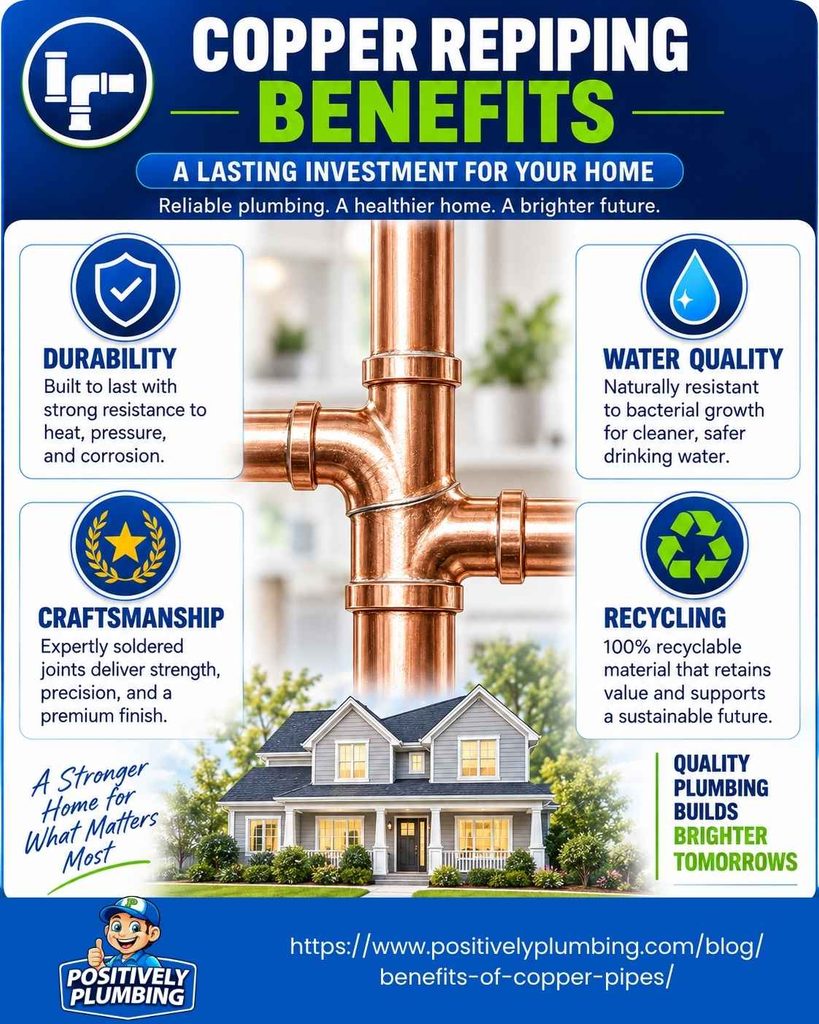
The benefits of copper pipes include long service life, strong heat and pressure resistance, natural resistance to bacterial growth, and a premium finish that fits well in older and custom-built homes.
- Built to last: Copper water lines often last 50 to 70 years when water chemistry and installation are right.
- Better for demanding applications: It handles hot water, high pressure, and Florida’s humid conditions well.
- Clean, stable material: Copper does not contain the additives found in plastic pipe, and its surface can limit bacterial growth inside supply lines.
- Premium craftsmanship: Properly soldered copper joints are durable, precise, and well suited to high-value renovations.
- Sustainable value: Copper is fully recyclable and retains scrap value at the end of its service life.
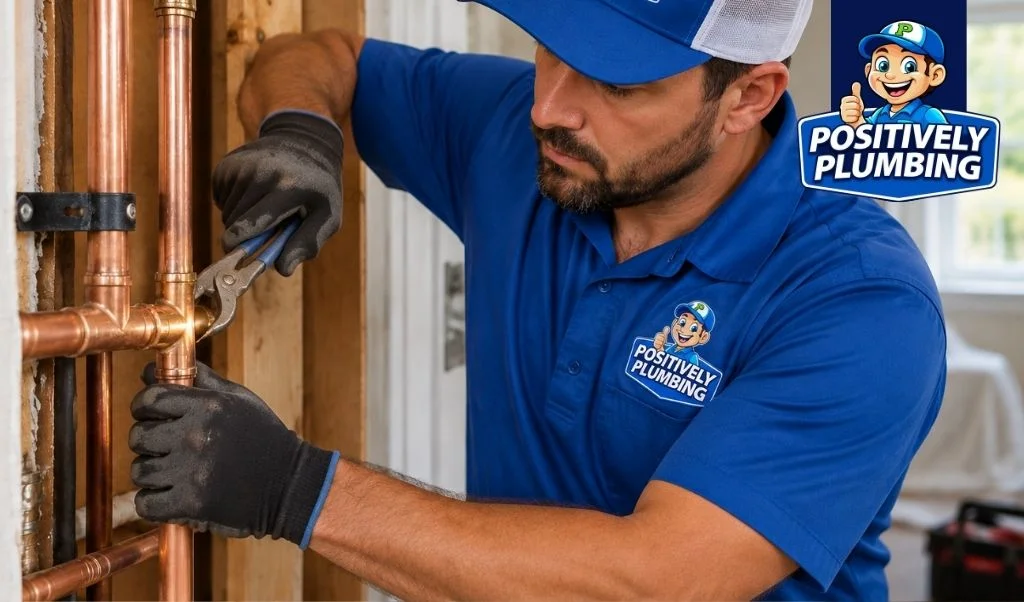
Positively Plumbing brings custom home construction experience to its copper soldering work, with the care and clean installation standards that detailed repiping projects require.
I’m Stephanie Byrne, co-owner of Positively Plumbing, where our team helps Pinellas County homeowners understand the real benefits of copper pipes during repairs, renovations, and full repipes. We focus on clear answers, skilled work, and recommendations that fit the home instead of a sales script.
This technical guide analyzes the health benefits, structural rigidity, and water chemistry factors surrounding copper plumbing in coastal Florida. If you are comparing synthetic and metallic materials, read our detailed breakdown on PEX vs. Copper Repiping. To evaluate full investment variables for your home’s square footage, explore our guide on the cost to repipe a house in Florida.
The Premier Health and Structural Benefits of Copper Pipes
Copper has been a mainstay in residential plumbing for decades because it is rigid, holds up to heat and pressure, and has a long service record behind it. For homes in Largo, Belleair, and Dunedin where the plumbing is expected to outlast the owner, that track record is the main argument for it.
Health and Antimicrobial Benefits of Copper Pipes for Drinking Water
Copper is naturally biostatic. Trace copper ions at the pipe wall make it harder for bacteria and biofilm to establish themselves than on some other materials, which is one reason copper has carried a long track record in potable water systems.
Copper is also an inorganic metal, so there are no plasticizers or synthetic additives to leach into hot water lines. Some homeowners notice a faint plastic taste from a brand-new plastic system; copper does not produce that. None of this replaces municipal treatment or a whole-home filter, and any plumber telling you a pipe material sterilizes your water is overselling.
The EPA sets a copper action level of 1.3 mg/L in drinking water. That threshold is a trigger for utilities to act on corrosion control, and it applies to water that has been sitting in household plumbing. If you ever have questions about upgrading your household supply lines to safeguard your family’s water, explore our comprehensive residential plumbing services.
Longevity and Climate Durability Benefits of Copper Pipes in Coastal Florida
Florida’s unique coastal environment presents distinct challenges to residential structures. Between high outdoor humidity, salt air along Clearwater Beach and Madeira Beach, and heavy demand on hot water systems, home plumbing takes a daily beating. Copper handles these conditions well, with an expected service life of 60 to 70 years when water chemistry and installation are right.
Consider these technical highlights that illustrate copper’s physical toughness:
- Pressure resistance: Type L copper is rated well above the 40 to 60 psi a typical household system runs at, with plenty of margin for pressure spikes and water hammer.
- Non-combustible: Copper does not burn or give off fumes in a fire, which matters in attics, garages, and any run that shares space with mechanical equipment.
- Heat transfer: Copper conducts heat far better than steel, which is why it is a common choice for hot water lines and radiant heating.
- Structural stability: Its natural rigidity prevents sagging over long pipe runs, resisting deformation from seasonal temperature swings in unconditioned attics or garage utility bays.
One honest limit: rigid copper does not flex, so in a hard freeze it can split where PEX would stretch. That rarely matters in Pinellas, but it is the reason we ask about exposed runs before quoting.
In historic coastal areas like Old Northeast in St. Petersburg, where homes have solid masonry and traditional framing, copper’s rigidity keeps water lines straight, secure, and quiet over long runs.
Environmental Sustainability and Property Value Premium
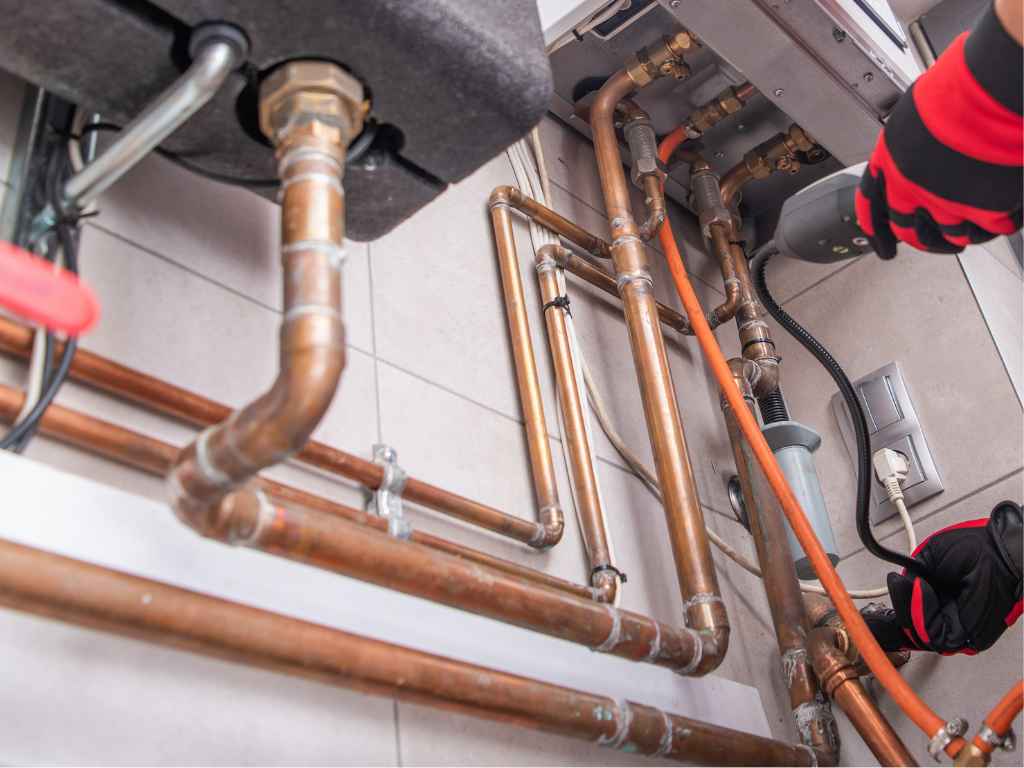
Homeowners committed to green building practices appreciate that copper is one of the most environmentally responsible choices available. Copper can be recycled indefinitely without losing its properties, and a large share of all the copper ever mined is still in service today. Recycling it also takes far less energy than refining new ore from scratch, so the material carries a smaller footprint across its life cycle than the raw tonnage suggests.
Beyond environmental perks, installing copper plumbing delivers tangible economic protection. High-end strict HOAs and historic architectural boards across Seminole, Harbor Bluffs, and South Pasadena frequently favor or require metallic piping during historic home restorations. Copper lines serve as a clear sign of quality to prospective buyers, boosting overall home resale value.
Copper costs more up front than PEX. Over a system that lasts sixty years, that gap looks different than it does on the estimate.
Key Considerations, Corrosion Prevention, and When to Repipe
Copper earns its lifespan only under the right conditions. Water chemistry, grounding, and installation quality all decide whether you get sixty years or six.
Understanding Water Chemistry, pH Levels, and Pinhole Leaks
Copper pipes naturally form a thin protective oxide layer (patina) along their inner walls, which shields the raw metal from direct contact with flowing water. Aggressive water chemistry can disrupt that protective barrier over time.
EPA’s secondary standard for pH puts drinking water between 6.5 and 8.5. Below 6.5 the water turns corrosive and starts working on the inside of the pipe. Add high velocity through tight fittings, above roughly 8 feet per second on cold lines, and localized pinhole leaks can develop.
Common causes of copper pipe corrosion include:
- Low pH water: Acidic water slowly dissolves the interior wall of the pipe over several years.
- Unflushed soldering flux: Leftover acidic flux residue from improper joint preparation can pit metal walls internally.
- Stray electrical currents: Improperly grounded electrical systems attached to metal plumbing can cause galvanic degradation. If you are already seeing damp spots, leak detection finds the source before drywall comes down.
- Chloramines and high velocity: Harsh municipal sanitizers combined with turbulent flow around tight fittings can wear down internal bends.
Your water utility is required to send an annual water quality report every July, and the CDC has a plain-language guide to reading a drinking water quality report if the tables look impenetrable. Copper and pH are the two lines that matter here. If you would rather not dig through it, we can walk you through what applies to your address on a service visit.
Warning Signs Your Home Needs Copper Pipe Replacement
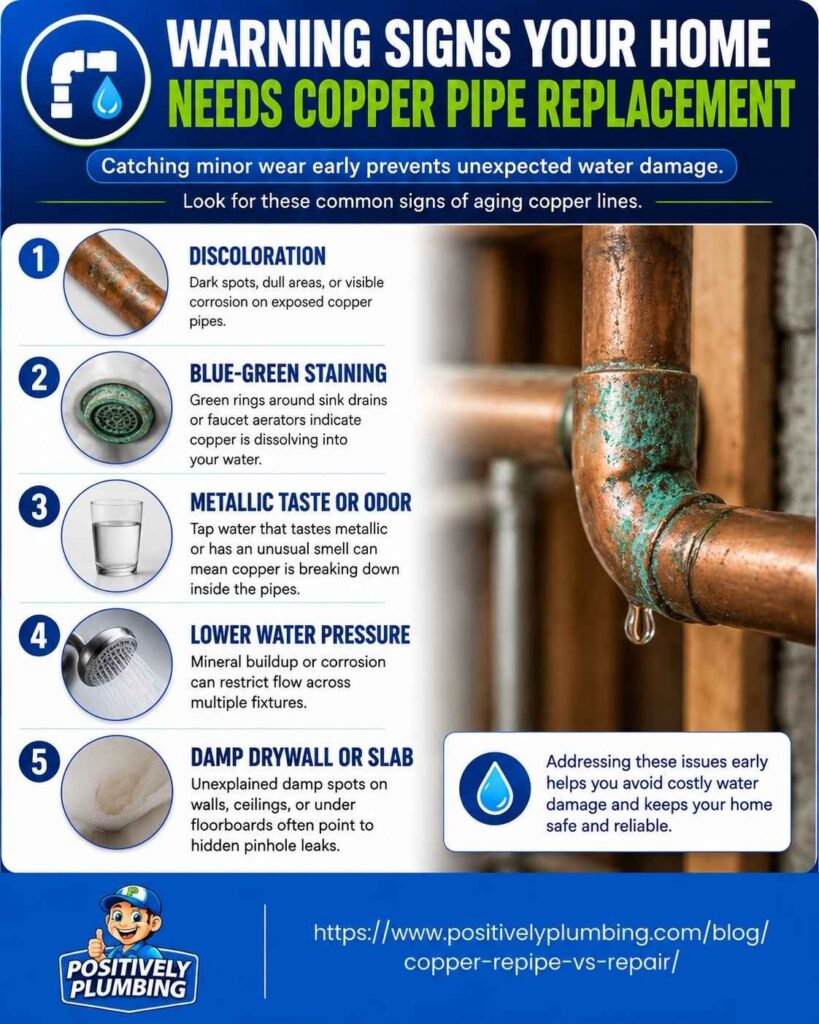
Plumbing systems rarely fail without warning. Catching minor wear early prevents unexpected water damage to plaster, hardwood floors, or custom cabinetry.
Keep an eye out for these clear indicators that your aging copper lines require professional attention:
- Blue-green staining: Persistent green rings around sink drains or faucet aerators indicate elevated levels of copper dissolving into your supply.
- Metallic taste or unusual odor: Tap water that tastes bitter or metallic suggests standing water is picking up copper ions from decaying pipe walls.
- Unexplained pressure drops: Internal mineral buildup or localized corrosion can restrict water flow across multiple fixtures simultaneously.
- Damp drywall or slab moisture: Small damp spots on ceilings, walls, or under floorboards point to active pinhole leaks hidden behind wall cavities.
If you spot these warning signs, review our dedicated page on pipe repair and replacement to explore reliable solutions tailored to your property.
Key Takeaways
- Decades of Proven Performance: Properly installed copper water lines deliver 50 to 70+ years of reliable service in coastal Florida homes.
- Naturally biostatic: Copper resists bacterial growth and biofilm on the pipe wall, and adds no plasticizers or synthetic additives to your water.
- UV and heat resistant: Copper does not degrade under direct sunlight or extreme attic temperatures, which makes it the practical choice for outdoor and exposed runs where PEX cannot go.
- Craftsmanship Matters: Torch soldering requires precise deburring, uniform heat application, and lead-free solder to prevent premature corrosion.
- Property Value Premium: Copper repiping acts as a high-end structural upgrade that appeals to prospective buyers and satisfies strict HOA building standards.
Upgrade Your Pinellas County Home with Expert Craftsmanship
Achieving the full benefits of copper plumbing depends entirely on expert installation. Torch soldering requires precision, proper tube deburring, uniform heat distribution, and lead-free materials to guarantee leak-free joints that last for generations.
At Positively Plumbing LLC, our co-owners Stephanie and Kevin Byrne bring hands-on residential construction experience to every repiping project across Pinellas County. We focus on clean cuts, code-compliant soldering, and transparent communication from initial quote to final pressure test. Whether you own a mid-century home in Pinellas Park, a coastal estate in Belleair Beach, or a historic residence in Tarpon Springs, our team respects your property’s integrity.
When you are ready for a lasting plumbing upgrade built on honesty, clean craftsmanship, and proven materials, schedule expert copper repiping services with our friendly team at Positively Plumbing today.
