

Why Does Hard Water Feel Harmless Until It Turns Into Something to Worry About?
You may notice cloudy dishes, crusty faucets, lower water pressure, or a water heater that seems to struggle more each month, but it is easy to dismiss those signs as normal wear and tear in a Largo home. The real concern is what you cannot see: minerals building up inside your pipes, stressing fixtures, shortening appliance life, and creating an imperative need to act before a small warning sign becomes a leak, clog, or flooded floor.
At Positively Plumbing LLC, we help Pinellas County homeowners connect everyday symptoms to the bigger story happening in their plumbing system. Our team can test your water, inspect the areas most at risk, and recommend honest, no-pressure solutions that protect your pipes, water heater, and home before hard water damage becomes an expensive emergency.
What Does Hard Water Do to Your Plumbing?
- Minerals (calcium and magnesium) build up inside pipes, slowly narrowing them
- Water pressure drops as scale accumulates
- Water heaters lose up to 30% efficiency and fail years early
- Faucets, fixtures, and appliances wear out faster
- Pinhole leaks and slab leaks become more likely over time
Nearly 9 out of 10 U.S. homes deal with hard water. In Florida, the problem runs deep, literally. Pinellas County’s water supply draws from groundwater aquifers that pass through limestone-rich bedrock. That journey dissolves calcium and magnesium into the water before it ever reaches your tap. The result is mineral-heavy water that looks and tastes completely normal, while quietly doing damage inside your pipes, water heater, and appliances every single day.
Most homeowners don’t notice until something breaks.
By then, what started as scale buildup has turned into a clogged pipe, a failed water heater, or a slab leak, all of which cost far more to fix than to prevent.
I’m Stephanie Byrne, co-owner of Positively Plumbing in Largo, and after years of managing plumbing jobs across Pinellas County alongside my husband Kevin, hard water damage is something we see regularly in the homes we service, especially in older copper-piped houses where the scale has had decades to build. This guide will show you exactly what’s happening inside your pipes and what you can do about it before it becomes an emergency.
How Do Hard Water Plumbing Issues Escalate into Emergencies?
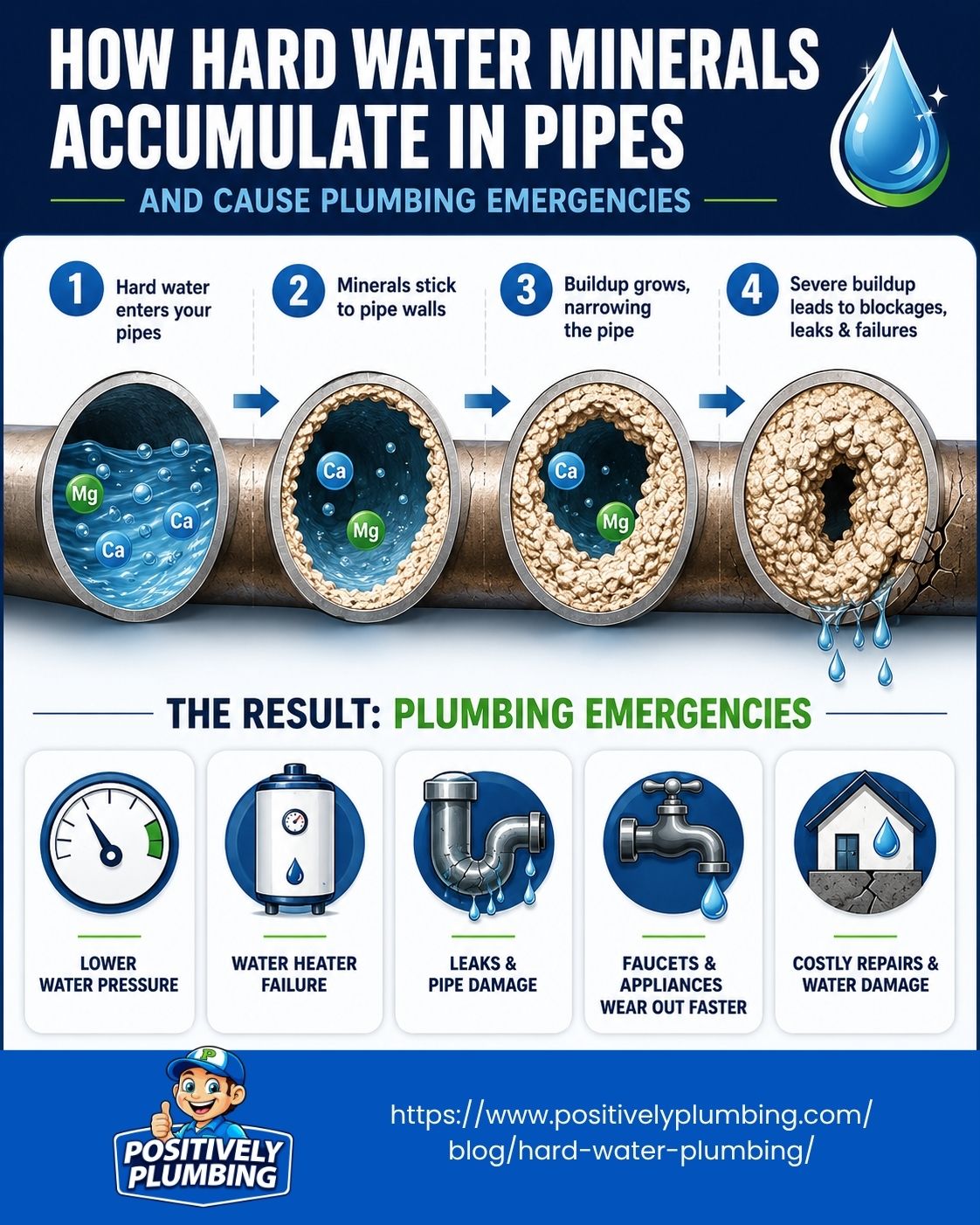
When hard water is heated or left standing, a natural chemical reaction occurs: dissolved calcium and magnesium precipitate out of the water, forming solid calcium carbonate. This solid material is better known as limescale.
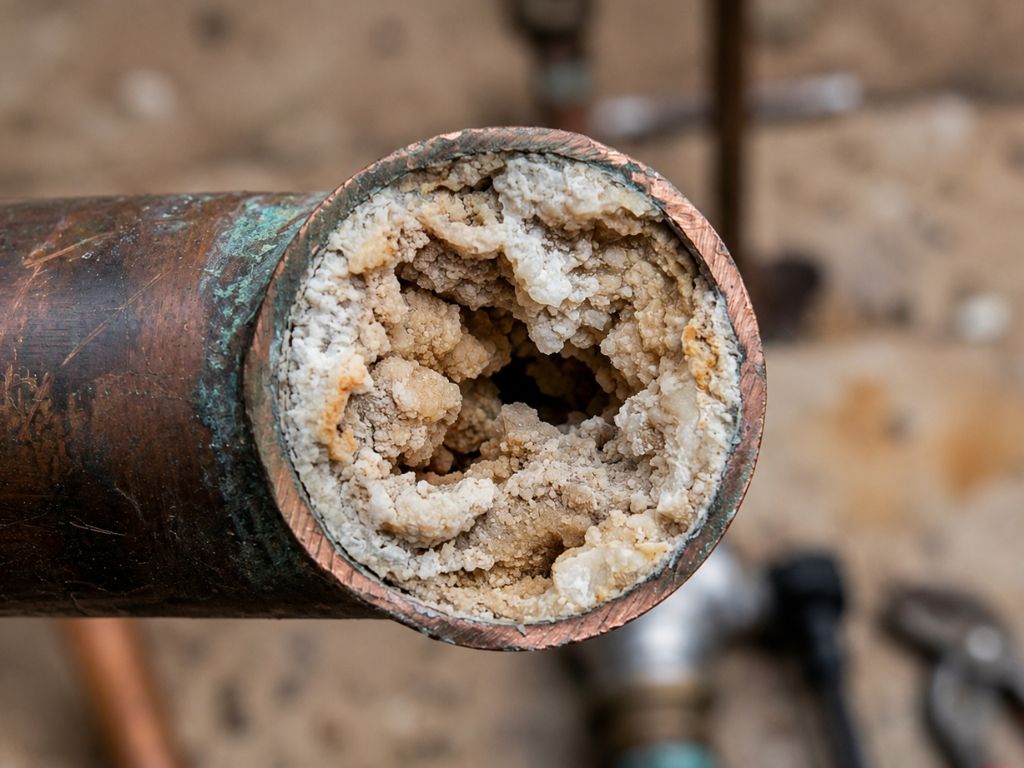
Inside your pipes, this scale behaves like cholesterol in human arteries. It doesn’t just sit there; it clings to the interior walls, gradually narrowing the pathway available for water to flow. As the diameter of the pipe shrinks, water pressure drops throughout your home.
This restriction does more than just ruin your morning shower; it puts immense physical stress on your entire plumbing system. The narrowed pathways force your plumbing joints and valves to work under higher, uneven pressure.
Over time, this localized stress leads to weakened joints, cracked seals, and pinhole leaks. When these leaks occur behind walls or under concrete slabs, they quickly escalate into costly emergencies. If you are already experiencing low pressure or suspect a hidden leak, getting professional Plumbing Repairs is the best way to stop the damage before it floods your home.
What is Hard Water and Why is it Common in Pinellas County?
To understand why our water is so mineral-dense, we have to look underground. Florida’s municipal water sources rely heavily on groundwater aquifers. As rain filters down through our soil, it passes through thick layers of limestone and chalk bedrock. Limestone is primarily composed of calcium carbonate. The water naturally dissolves these mineral formations, absorbing calcium and magnesium ions along the way.
The U.S. Geological Survey (USGS) measures water hardness in milligrams per liter (mg/L) or parts per million (ppm). Water with more than 180 mg/L is officially classified as “very hard.” For perspective, San Diego’s famously hard water typically measures between 260 and 310 ppm.
Here in Pinellas County, including Largo, Seminole, and Clearwater, our local groundwater often hits similar “very hard” ranges. This high mineral concentration is why homeowners across our service areas constantly battle white, chalky crust on their fixtures.
How Does Hard Water Scale Destroy Pipes and Fixtures?
The arterial plaque analogy is the most accurate way to describe how limescale destroys a piping system. As scale accumulates, it creates a rough, jagged surface inside the pipe. This rough texture does two things: it attracts even more minerals, accelerating the buildup, and it disrupts the smooth, laminar flow of water.
This disruption creates turbulent flow. Instead of gliding smoothly through the pipe, water swirls and crashes violently against the pipe walls. In metal pipes like copper, this constant turbulent erosion wears down the metal from the inside out, leading to pinhole leaks and slab leaks.
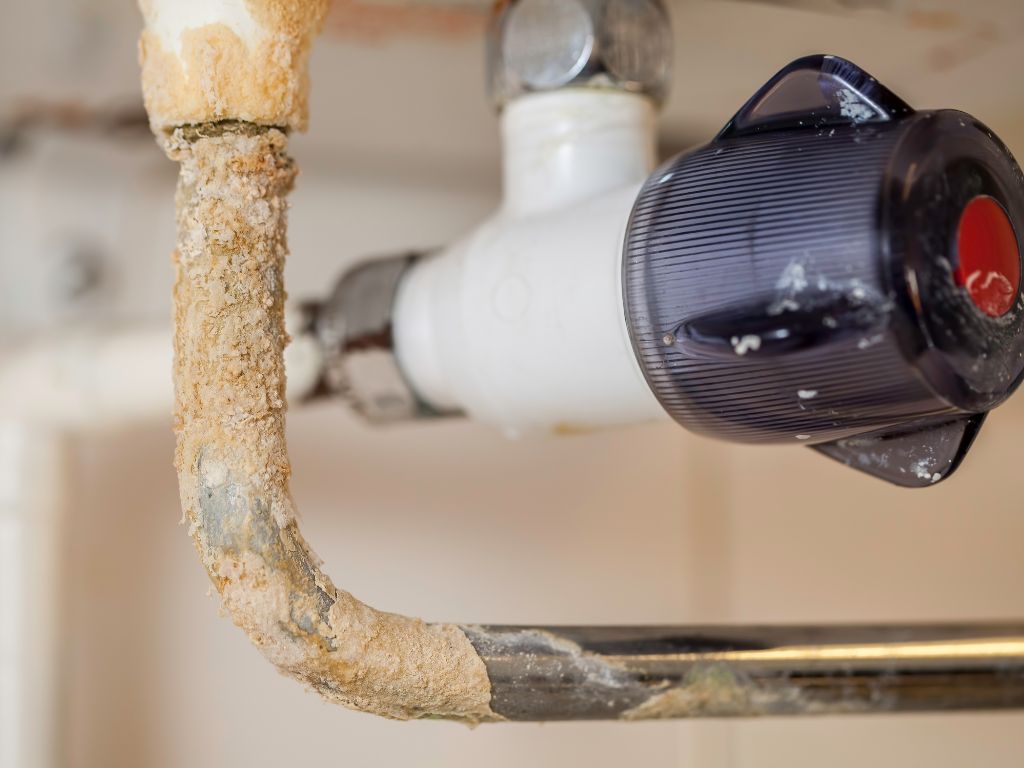
Furthermore, this scale doesn’t spare your fixtures. It creeps into faucet cartridges, showerheads, and shut-off valves. The abrasive minerals grind against the delicate rubber seals and ceramic discs inside your faucets, causing persistent drips and stiff handles. For another homeowner-focused explanation of how hard water buildup can restrict flow and strain plumbing over time, see this American Home Shield guide to hard water buildup in pipes.
How Does Hard Water Damage Water Heaters and Appliances?

Your water heater is the ground zero for the hard water damage. Because chemical precipitation accelerates at high temperatures, minerals settle out of the water rapidly inside your hot water tank.
This sediment falls to the bottom of the tank, burying the lower heating element or insulating the gas burner. Because scale has incredibly low thermal conductivity, it acts as a thick insulating blanket. Your water heater has to work twice as hard and run much longer to heat the water through this thick layer of rock.
This leads to:
- A 30% reduction in water heater efficiency, drastically raising your monthly energy bills.
- Thermal stress that causes the steel tank to overheat, crack, and eventually leak.
- Popping and rumbling noises caused by steam bubbles escaping from beneath the heavy sediment layer.
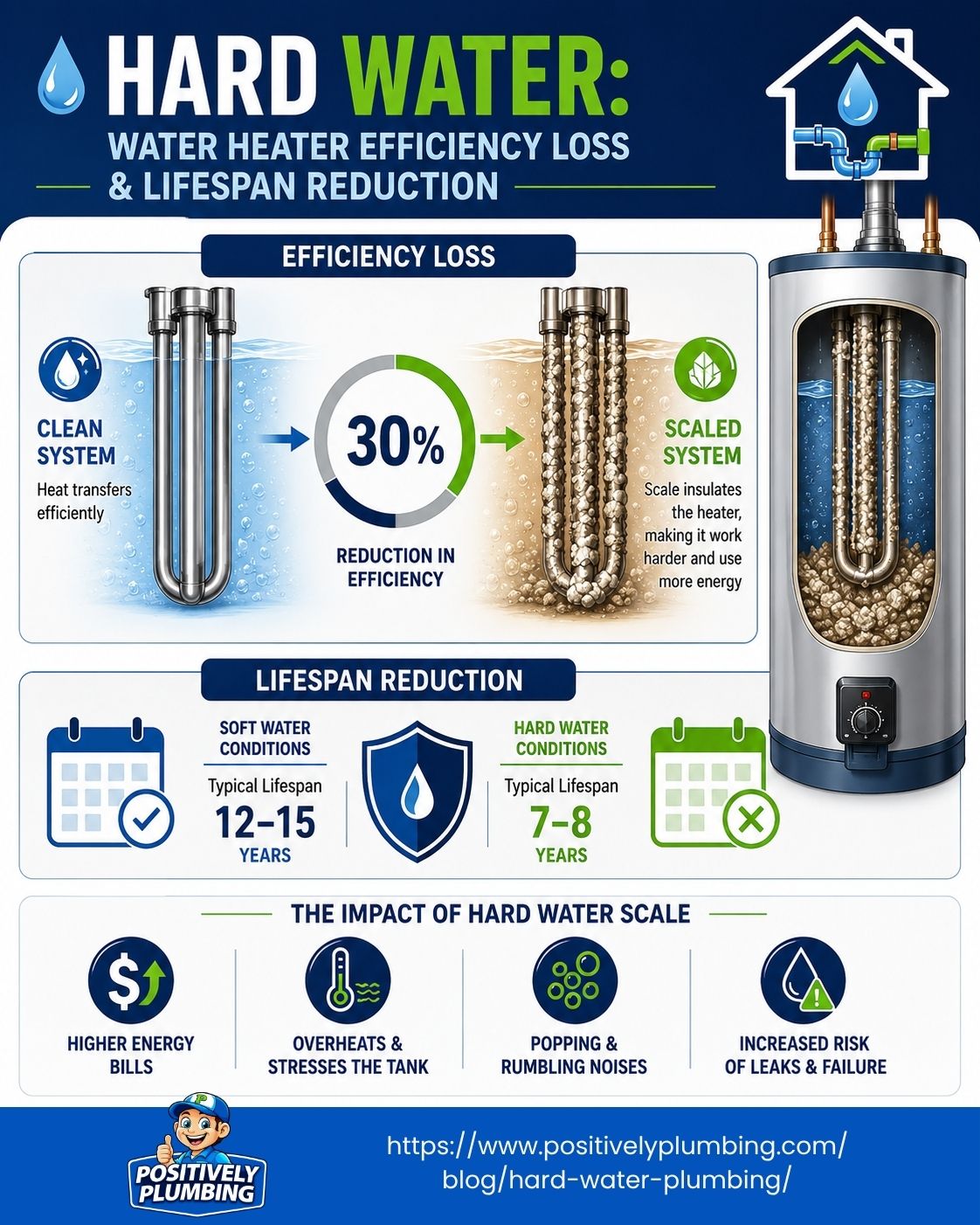
Whether you have a traditional tank system or are considering a modern upgrade, hard water will drastically shorten its lifespan. While a well-maintained system in a soft-water home can easily last 12 to 15 years, untreated hard water can cause a system to fail in just 7 to 8 years. If you are noticing lukewarm water or strange noises, it is time to service your Water Heater. If you are debating between systems, check out our guide on Tankless vs Tank Water Heater FL to understand how hard water impacts each type.
Professional Solutions to Protect Your Largo Home
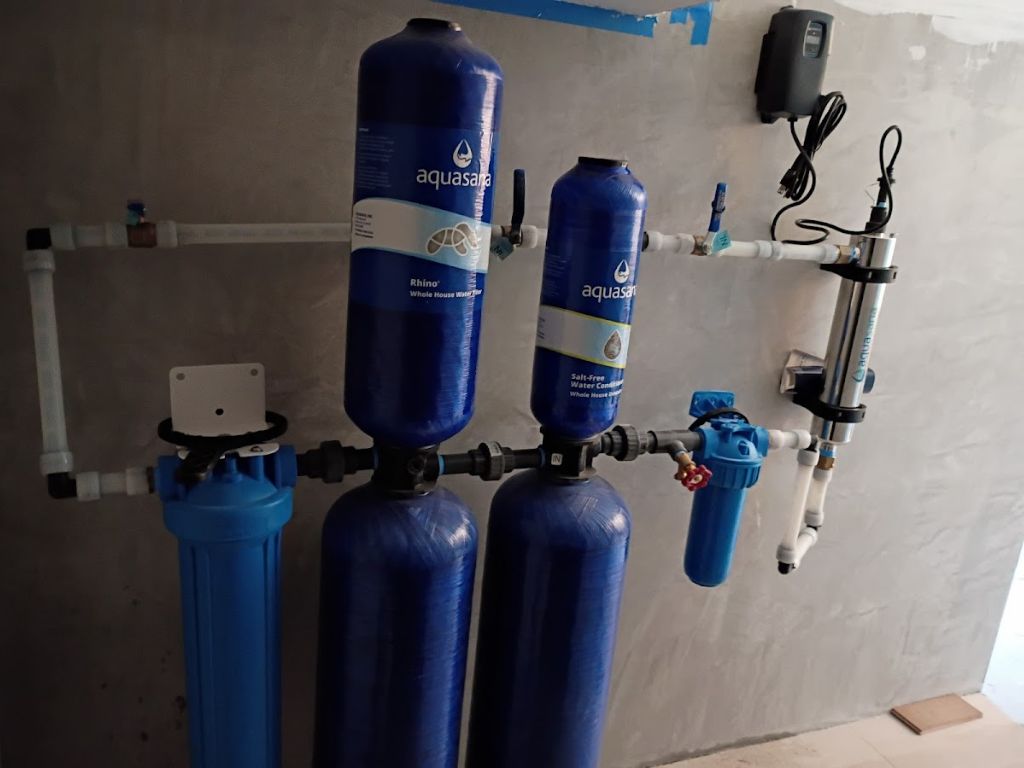
The good news is that you don’t have to let hard water destroy your home. There are highly effective, professional solutions designed to neutralize these minerals before they ever enter your plumbing system.
The gold standard for treating very hard water is a salt-based water softener utilizing ion-exchange technology. These systems route incoming water through a tank filled with negatively charged resin beads. These beads attract and trap the positively charged calcium and magnesium ions, replacing them with harmless sodium or potassium ions.
For homeowners looking for low-maintenance options in moderate-hardness areas, salt-free water conditioners are an alternative. Rather than removing the minerals, they alter their crystalline structure so they cannot stick to pipe walls.
Choosing the right system starts with an accurate water hardness test. At Positively Plumbing, we provide precise testing to determine your exact grains per gallon (GPG) rating, allowing us to customize a solution that fits your household’s needs. You can explore our full range of water treatment Services to find the perfect fit.
Recognizing the Signs of Mineral Damage in Your Home
You don’t need a lab to tell you if you have hard water. Keep an eye out for these common warning signs around your home:
- White, crusty buildup on your faucet aerators, showerheads, and around drain flanges.
- Cloudy glassware and spotted dishes, even after a full dishwasher cycle.
- Dry, itchy skin and dull hair because the minerals prevent soap and shampoo from lathering or rinsing away cleanly.
- Sticky soap scum coating your bathtub, shower glass, and tiled walls.
- Faded, stiff laundry caused by detergent reacting with minerals to leave a residue on fabrics.
- A gradual drop in water pressure in multiple rooms.
The DIY Water Bottle Soap Test: If you want a quick home test, fill a clean plastic water bottle halfway with tap water. Add a few drops of liquid dish soap and shake it vigorously. If the bottle fills with thick, fluffy suds and the water underneath remains clear, you have soft water. If there are very few suds and the water looks cloudy or milky, you are dealing with hard water.
Which Pipe Materials Hold Up Best Against Hard Water: Copper, PEX, or Galvanized Steel?
Different piping materials react differently to hard water minerals. Understanding what is behind your walls can help you predict and prevent future plumbing emergencies.
| Pipe Material | Resistance to Scale | Risk of Corrosion / Leaks | Lifespan in Hard Water Areas |
|---|---|---|---|
| Galvanized Steel | Extremely Low | High (Severe rusting and clogging) | 20-30 Years (Often fails much sooner) |
| Copper | Moderate | High (Turbulent flow causes pinhole leaks) | 30-40 Years (Highly prone to slab leaks) |
| PEX (Cross-linked Polyethylene) | Extremely High | None (Inert plastic does not corrode) | 50+ Years (Scale cannot easily adhere) |
While copper and galvanized steel are highly vulnerable to the abrasive effects of hard water, modern PEX piping is incredibly resilient. Because of its smooth plastic interior, minerals struggle to adhere to PEX, making it the superior choice for repiping homes in Pinellas County.
If your older copper pipes are starting to fail, exploring Pipe Repair Replacement is a smart proactive step. You can also read our detailed breakdown of PEX Pipe vs Copper Pipe Pros Cons to see why we highly recommend PEX for local homes.
How Can You Protect Your Plumbing from Hard Water Damage?
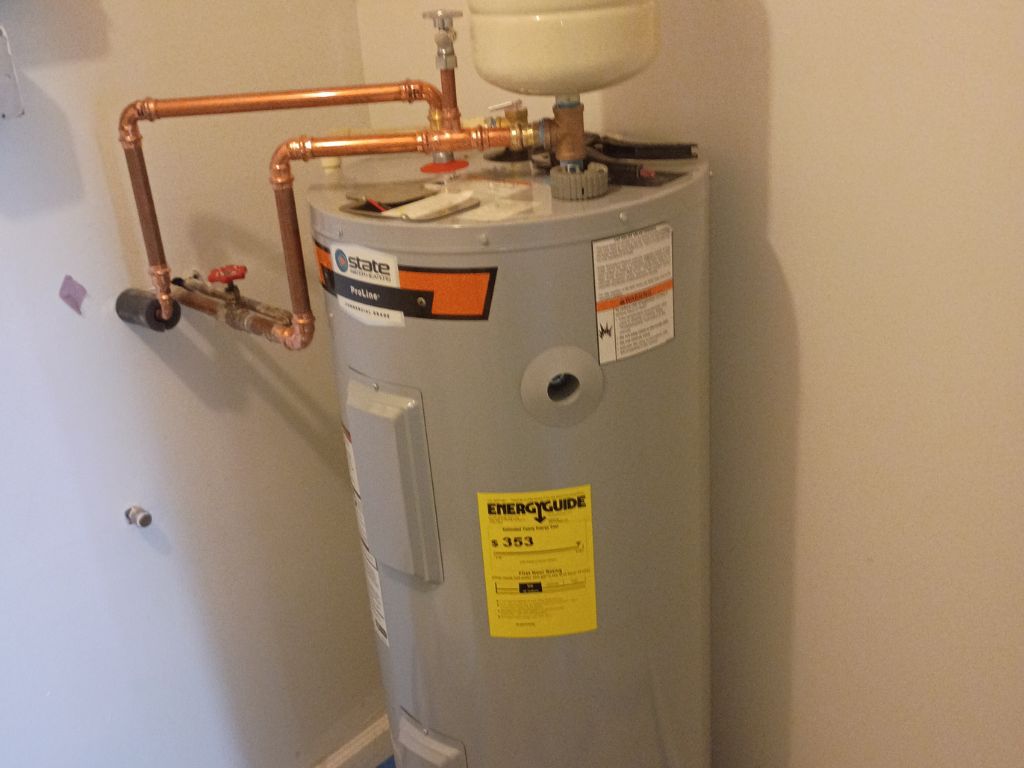
Protecting your home from the silent threat of hard water doesn’t have to be overwhelming. By implementing a few simple, proactive maintenance habits, you can extend the life of your plumbing system by years:
- Flush your water heater annually: Regular flushing removes the accumulated sediment before it can bake onto the bottom of the tank or coat the heating elements.
- Descale fixtures with vinegar: Soak clogged showerheads and faucet aerators in warm white vinegar for 30 to 60 minutes to dissolve mineral crust.
- Install a whole-house water softener: This is the only permanent, root-cause solution to prevent scale from entering your pipes.
The Water Quality Association represents the residential and commercial water treatment industry and provides product and professional certifications, as well as consumer resources, to help homeowners make informed water treatment decisions. Across our local Pinellas County communities – from Belleair Bluffs to Belleair and Harbor Bluffs – choosing a properly tested and professionally installed water treatment solution can help protect your plumbing, appliances, and peace of mind before mineral buildup turns into a larger repair.
Wondering whether hard water is already affecting your plumbing, water pressure, fixtures, or water heater? That is exactly the question this guide is meant to help Largo and Pinellas County homeowners answer before mineral buildup turns into a bigger repair. If you are seeing crusty faucets, cloudy dishes, low pressure, rumbling hot water, or signs of a hidden leak, now is the time to have your system checked.
At Positively Plumbing LLC, we make that next step simple with honest pricing, reliable workmanship, and no-pressure guidance from a local team that understands Pinellas County water. Schedule a hard water plumbing inspection today, or contact us right away for fast Emergency Plumbing Services if you are dealing with an active leak, sudden pressure loss, or a flooded area. Let us help you protect your pipes, your water heater, and your home before hard water gets the chance to cause more damage.
